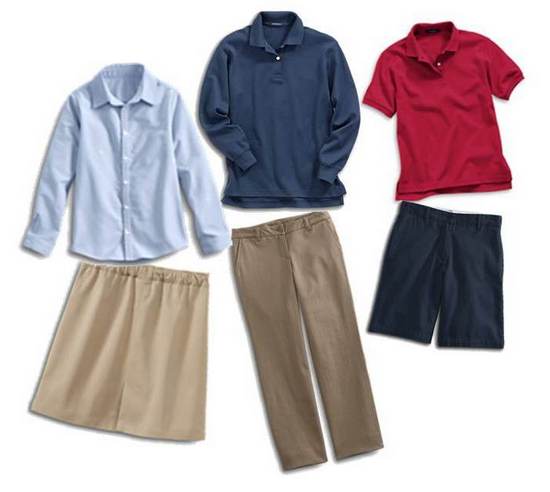
| by Richard F. Daugherty Research has consistently recognized a strong relationship between economic disadvantage and low norm-referenced test scores. Many schools with low academic achievement scores, low attendance rates, and high transiency percentages have high rates of students eligible for free or reduced lunches which researchers frequently use as a poverty indicator. Similarly, studies have found that the strongest predictor of school crime is the nature of the surrounding community, i.e., communities with high levels of poverty and crime tend to have schools with high levels of crime (Gottfredson and Gottfredson, 1985). In the Washoe County Schools, which include the cities of Reno, Sparks, and a portion of Lake Tahoe, one of the middle schools fitting the above socioeconomic profile has been working, not only to overcome such perceived obstacles, but to strive for excellence. Led by Principal Debbie Feemster, the faculty, staff, and students at Traner Middle School have already improved reading scores on the norm-referenced TerraNova examinations. According to a school performance report (1999-2000), truancy rates and the number of school suspensions have also declined with the implementation of a peer mediation program, family liaisons, and a family focus center. In an effort to further enhance academic and social goals, the school's parent/teacher organization discussed, researched, and voted to pilot a school uniform program commencing November 2000. School officials used a variety of research studies and a manual published by the U.S. Department of Education which noted that "A safe and disciplined learning environment is the first requirement of a good school" (1998). The manual stresses the importance of parental support and states that in recent years the strongest push for school uniforms has been initiated by parent groups--such as Traner's--seeking improved school safety. Often school uniforms are less expensive than the clothing that students typically wear to school. Nonetheless, the cost of purchasing a uniform may be a burden on some families. Districts planning to institute a uniform policy should address this issue prior to implementation. Grants of assistance have been available from federal or state agencies and from private sources, and graduates typically donate their uniforms to the school. The many perceived benefits of adopting a school uniform policy are summarized in the following eclectic listing: School safety. * Decreased violence and theft. * The identification of nonstudent intruders. * Prevention of gang attire. School attendance. * Less embarrassment over clothing could increase attendance. * The safer the school, the more likely students will attend. Academic performance. * Increased attention on academics (less on clothing). * Higher expectations from teachers. Social benefits. * Uniforms may promote a sense of community and camaraderie. * School uniforms lessen the difference between rich and poor. * Less fashion-conscious school environment. * Reduction in clothing-related peer conflict. Preparation for the future. * Uniforms can prepare students for work world where expectations are greater. * Uniforms create a sense of "teamwork." * Students are more likely to have a businesslike attitude. School administrator benefits. * More time spent on instructional leadership. * Less time spent on clothing-related conflicts. Parental benefits. * Eliminating the discussion over what to wear to school. * Uniforms promote efficiency and organization. * Less pressure from children to purchase trendy, high-priced clothing. School leaders and other stakeholders must decide whether to have a voluntary or mandatory school uniform policy. Voluntary policies are usually implemented by parental consensus through local PTAs or PTOs. Parents are not required to dress their children in uniforms, despite the fact that the policy recommends them. Under voluntary programs, schools are not required to buy uniforms for students whose parents cannot afford them but most opt to do so. If children do not wear uniforms, they will not be reprimanded. A voluntary policy involves few legal issues. Mandatory programs are usually implemented by a board of education or a similar administrative authority. Students are required to wear uniforms, although some exceptions--usually involving religious reasons--can be made. When parents cannot afford uniforms, most schools supply them. According to the general counsel of the National Association of Secondary School Principals, "Clothing requirements are not considered a violation of their freedom of expression if there's a valid educational reason for imposing them" (Wingert, 1999). To gain firsthand experience and knowledge, Traner's principal visited a successful mandatory school uniform program in Long Beach, California, which reportedly had achieved a 70% reduction in student discipline incidents. Officials at Traner gained the support of over 90% of the parents and nearly the entire school population for a voluntary uniform program with the following goals: * Increase school safety * Increase attendance * Identify non-students more readily * Decrease the theft of clothing * Prevent gang-related attire The school district did not officially endorse or fund the pilot program and Traner officials were therefore faced with working out such details as locating a low-priced uniform that would be popular with students and finding a source of funding to purchase uniforms for students who could not afford them. Students were given the opportunity to participate in the uniform selection process, choosing tops in either of their school colors (red or white) and khaki-colored pants, skorts, or shorts. The school benefitted when a large discount store offered to individually size each student and order the uniforms--and at a greatly discounted rate. For example, students were able to purchase pants retailing for $20 for $12.50. Tops and lined windbreakers with the school logo were sold for $14.00 and $22.00, respectively. For the initial year of the pilot program, students were allowed to choose their own footwear, with white basketball shoes being recommended. Fridays were designated "casual days" when students could dress in regular attire. The fund for purchasing uniforms for students who couldn't afford them was quickly established with monetary gifts from a number of unsolicited sources, including some out-of-district donors. The school also purchased washers and dryers so students could do their own laundry and received a grant to transport students staying late for homework or laundry duties. According to the principal, when Traner's uniform policy began implementation in November, the majority of students and about 70% of the faculty and staff wore uniforms, but as the school year ended seven months later, voluntary participation by students had dropped to about 50%. Although many of the goals of the uniform policy were at least partially successful, Ms. Feemster's recommendation was the official adoption by the school board of a mandatory program. Research regarding the effectiveness of school uniform implementation remains inconclusive. Supported by studies which indicate that school uniforms have little influence in reducing delinquency or gang activity, parents of a few students in districts with mandatory school uniform dress codes have challenged such policies in court (ETS, 1998). Schools which have adopted policies with the stated purpose of improving the quality of education have thus far prevailed as courts are apparently willing to permit at-risk schools, like Traner, to pilot programs aimed at providing a "safe and disciplined learning environment" (Canady v. Bossier, 2001). References Annual Performance Report, Fred Traner Middle School 1999-2000, Washoe County School District, Reno, Nevada. Canady v. Bossier Parish School Board, 240 F.3d 437 (5th Cir. 2001). Educational Testing Service. Order in the classroom: Violence, discipline, and student achievement. (1998), at page 9. See at Internet site: http://www.ets.org/ Gottfredson, G.D. and Gottfredson, D.C. (1985). Victimization in schools. New York: Plenum Press. U.S. Department of Education, Manual on School Uniforms. (1998). The full text is available through their Internet site: http://www.ed.gov/ Wingert, Pat. (1999). Uniforms rule. Newsweek, October 4, 1999. | |
RICHARD F. DAUGHERTY Associate Professor Department of Educational Leadership at the University of Nevada, Reno
| | Dr. Daugherty is a former public school teacher and administrator. For the past decade, his research and teaching emphasis has been education law. |
|