Our benefits

24/7 customer support

Professional writers

No plagiarism

Privacy guarantee

Affordable prices

94% of return customers

Free extras

Free title page

Free bibliography

Free formatting

Free of plagiarism

Free delivery

Home
The Kids Are All Right
by Lisa Neff


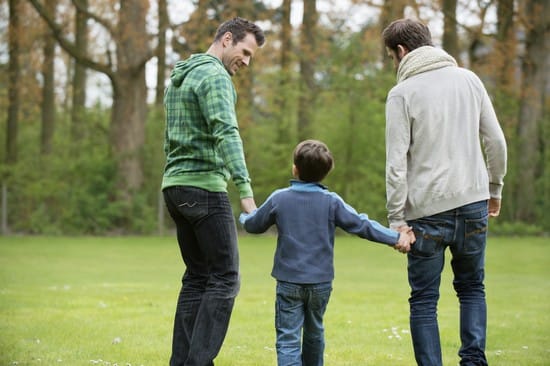
Hope Steinman-Iacullo, 17, was adopted as an infant by two gay men in New York City. Such an arrangement might have raised eyebrows at the time, but now she's pretty blase about the fact she has two dads who married in Toronto last year. "I call them both 'Dad,' and they can tell which one I'm talking to," she says. "People should know my life is extremely normal." Hope, who is taking a break from studying for a physics final to speak with The Advocate, adds, "Right now the biggest things on my mind are college, the SATs, and finals, stuff that hits close to home."


For their part, her fathers, partners Wayne Steinman, 54, and Sal Iacullo, 55, always dreamed of being parents. "When I met Wayne 32 years ago, it was unheard-of and there were no role models to guide us," Iacullo says. "But I didn't totally divorce the idea."


The issue of gay men and lesbians raising children has hit especially close to home as the debate over legalizing same-sex marriage continues. The fight over marriage has given new prominence to the decades-old battle cry that seeks to scare straight Americans into believing that gay people are a danger to children. Those making this assertion maintain that children raised by gay fathers or lesbian mothers will be confused about their own sexuality, are emotional wrecks, and are traumatized by bullies at school. Conservative group Focus on the Family proclaims that "depriving a child of a mother or a father is not in the child's best interest and is never compassionate," although its "research" consists of data supplied by fellow conservative groups. Even Massachusetts supreme judicial court justice Martha B. Sosman, in her dissent from the court's majority ruling last November in favor of gay marriage, bought into this reasoning, writing, "Studies to date reveal that there are still some observable differences between children raised by opposite-sex couples and children raised by same-sex couples."


What antigay groups continue to ignore is the fact that nearly 50 studies show there are no significant developmental differences between the children of gay parents and the children of straight parents. In recent years the American Psychological Association, the American Academy of Pediatrics, the National Association of Social Workers, and the American Bar Association have issued statements supporting parenting by gays.


Janet Gordon, 14, says there's nothing unusual about her family life in Ann Arbor, Mich., with her brother, Elliot, 13, and her moms, Peg, 40, and Pat, 50. "I have two moms, but my family functions like any other family. I don't find anything extremely different about us," she says. "There's nothing in studies saying that people from straight families turn out better. There's going to be people who turn out bad and people who turn out good, but it's not going to be because their parents are straight or gay."


The 2000 Census counted 594,000 households headed by same-sex partners willing to self-identify as such. Children under 18 live in about 33% of the lesbian couples' households counted and about 22% of the gay male couples' households. Gay rights groups claim the numbers may be too low since closeted, single-parent, and two-household families were not counted. They vary widely in their estimates of how many children live in gay households in the United States. The number of households could approach 14 million.


It's tough to arrive at a definitive count because numerous gay families remain afraid to come out, even to government census takers, says Aimee Gelnaw, executive director of the Family Pride Coalition, based in Washington, D.C. National polls indicate that Americans are deeply split over gay people raising children. "There are tens of thousands of them in places where there is not a [gay or lesbian] community, who live in secrecy, whose families may or may not be out, and whose day-to-day experiences in schools are not supportive," says Gelnaw, the mother of a 20-year-old son and an 8-year-old daughter.


Those who are not lucky enough to live in a gay-friendly place feel ignored or dismissed when they don't see their families represented. They are less likely to have a support network when their parents are called "dyke" or "fag," says Gelnaw. "For these kids, the insults are about their parents, and that feels very personal," she says.


Janet admits, "When I first meet new people I'm wary. So I'm not going to hide anything, but I don't go out of my way screaming that my parents are lesbians."


It's the same situation for 15-year-old Michael Cooper, who lives in Springfield, Va., with his single lesbian mom, Melodie Cooper, 38. Since kindergarten he has "understood that I just have a mommy and maybe I might have another mommy one day," but he does acknowledge feeling different and alone at times. "I guess I was a little afraid that I was the only kid in my situation," he says. "I wanted to be more comfortable with how my family was set up. I wanted to know others in the same situation."


His mother, an attorney with the Department of Veterans' Affairs, separated from her husband when Michael was 18 months old and came out shortly afterward. She decided to never shy away from talking to her son about her sexual orientation. "I told him over and over again throughout his stages of development," she says. "We're very close, and I think we can talk about anything. And he's never rejected me."


As a teen, Michael has finally resolved to tell people his mom is a lesbian. The reactions, he says, generally range from "whatever" to "that's cool" to "I wish I had a lesbian mom." He adds, "I think especially nowadays most kids are, like, more worried about how they do on their chemistry test than my parents or their parents."


Michael, Hope, and Janet say they've been helped by attending Family Pride Week celebrations in Saugatuck, Mich., and Provincetown, Mass. "It's cool to have friends who have the same living situation as you do," says Janet. "When you are with a bunch of people in that same situation you don't feel alone. It's fun, and you feel like everything's OK."


While these young people have found emotional support systems, equal marriage rights for gay men and lesbians would provide legal support. Proponents of marriage rights argue that the institution, with the thousands of benefits and rights it brings, would only help gay families find security and stability. In testimony submitted to the U.S. Senate Judiciary Committee in May, Phyllis G. Bossin of the American Bar Association stressed that concern: "At a time when millions of children are being raised by same-sex couples, the states should have the flexibility to protect these children by conferring legal recognition on the families in which they are being raised. Without a legal relationship to both of their functional parents, these children may not be entitled to child support from the nonlegal parent; they are not entitled to inherit through the nonlegal parent in the absence of a will; they may not be entitled to survivor benefits; and they may be prevented from ever seeing this parent, should the parents separate or the biological parent die."


The three teens, who are particularly stung by disparaging remarks from politicians and television pundits who criticize gay and lesbian parents, have all become activists in their own right. Janet lobbies for gay civil rights at the state capitol in Lansing, Mich., Hope serves on the board of directors for Children of Lesbians and Gays Everywhere, and earlier this year Michael participated in a press conference at the U.S. Capitol to oppose the proposed Federal Marriage Amendment, which would write a ban on same-sex marriage into the U.S. Constitution.


Hope is not particularly fond of Republican U.S. senator Orrin Hatch of Utah, who came out strongly for the Federal Marriage Amendment by stating, "Marriage is not about adult desires for affirmation and benefits, it is about the well-being of children. Two men being intimate are simply not the same as a husband and a wife, and alternative family forms are not just as good as traditional families."


Hope counters, "People who say things like that don't know what our family is like. They don't know that I have two parents who love me and protect me and we all care for each other. I just wish people who say those things would take the time to get to know us."


Neff is the managing editor of thee Chicago Free Press.
 
Next >

Service features

24/7 customer support

Written from scratch papers only

Any citation style

Fully referenced

Never resold papers

275 words per page Courier New font