Our benefits
Main Menu
| Home |
| Order form |
| Contact us |
| Blog |
| Home |
| Order form |
| Contact us |
| Blog |
| A LANDMINE REMOVAL INITIATIVE |
|
One Step at a Time: A LANDMINE REMOVAL INITIATIVE. by Mark Hyman
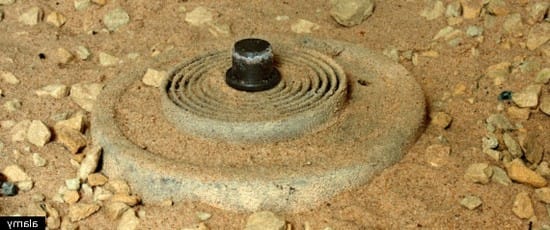
They cost as little as three dollars apiece, about the price of a student's lunch at the school cafeteria. They can appear in various shapes and sizes, some as seemingly innocuous as a hand-sized toy butterfly. Yet they have one purpose: to destroy whoever steps nearby. Antipersonnel landmines kill or maim approximately 26,000 people annually worldwide, about 85% of whom are innocent civilians and 40% of whom are children. They terrorize whole communities, devastating the productive capabilities rural families by depriving them of access to natural and agricultural resources. They stop children from attending schools or even playing. At Tenafly Middle School in Tenafly, New Jersey, a small but determined group of students (with some help from teachers and other adults in the community) are making a concrete difference in the lives of one mine-affected community. They hope to assist in the removal of all landmines from around the Tenafly's adopted "sister town" of Podzvizd in Bosnia-Herzegovina. Such an ambitious project did not spring to life in one day. I will outline the educational process that grew a "community of conscience" that lay the ethical and foundation for a landmine removal initiative. I will also discuss the practical steps that are also necessary for success. I hope that this account might inspire other schools and communities to consider performing a similar service initiative. Heroes of Conscience In the spring of 1997, I conceived of the extra-curricular Heroes of Conscience Club as an opportunity to encourage a group of middle school students (grades 6 through 8) to explore issues of conscience and develop their ethical sensibility. I hoped to create a community of students who might share a common commitment to their personal journeys of moral definition and transformation. I prompted discussion by introducing students to the lives of historical and contemporary ethical role models, to moral dilemmas faced by persons both historical and fictitious, and to related social and political concerns such as nonviolence and human rights. Using a variety of educational strategies such as reading stories and articles, role-playing, viewing video excerpts, and holding small-group discussions, we explored such concepts as heroism, compassion, conscience, and sacrifice for the common good. We looked at the dehumanizing aspects of war, the notion of unjust laws, and the actions of people during the Holocaust (resisters, rescuers, bystanders, collaborators, and perpetrators of violence). Through our common moral inquiry we formed a dose-knit bond that students began referring to as "our moral community." We succeeded in creating a safe haven for the unabashed exploration by middle school students into their moral lives. We succeeded in creating a culture of inquiry and trust in which children, using a common moral vocabulary, could discover, define, and give voice to their own moral awakening. I think that we succeeded in creating a "community of conscience." A leadership role for these students emerged through the creation and distribution of several club newsletters that prepared the student body for upcoming events while educating them with regard to the theme of nonviolence. Widening the Circle An adult Heroes of Conscience Club, inspired by the student group and composed mainly of parents, provided invaluable guidance, support, and hands-on assistance in the planning, organization, and implementation of future school-wide nonviolence events. In addition, teachers from each grade level of Tenafly Middle School volunteered to be port of a brainstorming and advisory council that met once a week to assist the student and adult groups. The success of the Heroes of Conscience Club led to a school-wide event, the Community of Conscience Project, in the spring of 1998. The purpose of the project was to provide the Tenafly Middle School and its local community with educational experiences based on the theme of nonviolence. The project elicited contributions from segments of community: from students, teachers, parents, neighbors, and representatives of local organizations. It consisted of three school-wide educational experiences: * "Heroes Day," featuring the nomination of local role models who were invited to share their personal commitments to nonviolence, compassion, and selfless service; * A lecture by Arun Gandhi, the grandson of Mahatma Gandhi, on the topic of nonviolence; and * An address delivered by Dr. Richard Deats, a physician in Tenafly, regarding the appeal for a Decade for a Culture of Nonviolence that has been made by Nobel Peace Prize laureates.(1) Our middle school had begun a serious, common inquiry into ethical principles and concepts. We were raising our awareness of and respect for values grounded, in a humanitarian perspective. Human Rights Day The theme of human rights was adopted for the following year's Community of Conscience Project in honor of the fiftieth anniversary of the United Nations' Universal Declaration of Human Rights.(2) On February 24, 1999, over thirty people (advocates, experts, and representatives of organizations) delivered presentations throughout the school on a wide range of topics and issues including genocide, wartime atrocities, civil resistance, civil fights, child labor, child soldiers, immigration, hunger, and homelessness. A major topic was the global landmine crisis. Ken Rutherford, an American landmine survivor and co-founder of Landmine Survivors Network, delivered a powerful and inspiration keynote address. A landmines exhibit on loan from UNICEF provided a clear picture of the destructive power of these devices. Last, representatives from the United Nations Association provided workshops for the entire student body regarding their Adopt-A-Minefield program. Tenafly Middle School students participated in the creation of a powerful and impressive human rights mural as an artistic outgrowth of Human Rights Day. While planning for Human Rights Day, I saw that the UNICEF landmines exhibit included graphic images of injured people, and was thus potentially emotionally disturbing. I was concerned about the way middle school students, teachers, and the principal might perceive it. Therefore, after a personal visit, I brought along five student volunteers from the Heroes of Conscience Club to get their assessment of the exhibit. Their highly favorable feedback encouraged me, but I took photographs of each of the display items and discussed them with my principal, Bob Weldon, and the faculty and parent members of our school advisory committee. The universal approval of this exhibit for display at Tenafly Middle School alleviated my concerns about the exhibit's graphic content. Considering Taking Action I expected that our studies and the Human Rights Day activities might inspire middle school students to want to make a contribution of some sort to the solution of a real world problem. While a number of service initiatives were discussed by our committees of parents, teachers, and educators, the notion of adopting a minefield seemed a natural outgrowth of Human Rights Day. The humanitarian focus of this concept made it agreeable to everyone involved. Current political issues regarding landmines (such as the decision by the United States not to sign the Ottawa Convention's Mine Ban Treaty or the political standing of the nation in which our minefield would reside) were deemed peripheral to our project's life-saving mission. What remained were a series of practical, but critical considerations. We needed to * ascertain the level of student support and enthusiasm for such a project; * create and develop landmine awareness clubs for both students and adults; * seek permission to conduct the project by the proper educational authorities; * develop educational and fund-raising goals and plans; and finally * look for a cooperating organization that could work with us to select a site and supervise the actual demining process. Following Human Rights Day, the student body of Tenafly Middle School responded with overwhelming approval to the idea of developing a landmine adoption project. This student backing provided the key factor -- human willpower -- needed to begin. Getting Started Practical considerations and the enormity of the task caused us to delay organizing until the beginning of the next academic year (September 1999). At that time I formed a Student Landmine Awareness Club from students who were interested in making a long-term commitment to the initiative. (Although several dozen students expresser. interest and attended a session of the club, ten students from grades six through eight committed to this project for the entire academic year of 1999-2000.) In developing my ideas for the club, I recognized a pedagogical need to * place the landmine crisis within the larger context of human rights and armed conflict; * help students identify personally with or feel empathy for victims from other nations and cultures whom they would never meet; * provide comprehensive information regarding the facts and issues about landmines; * inspire the students to believe in their "moral voices" and their ability to make a tangible difference in the lives of a mine-affected community; and * inspire them to commit the requisite time and energy to achieve this ambitious goal. In other words, I needed to demonstrate that this initiative represented a truly unique opportunity to express the humanitarian ideals of nonviolence, compassion, and selfless service espoused by our community of conscience project. To achieve the first of these ambitious objectives, I showed the video Landmines: Overcoming a Lethal Legacy, documenting the destructive impact of landmines worldwide.(3) After reading the Universal Declaration of Human Rights, students pointed out that all of the rights mentioned in that document are compromised or violated by the placement of landmines. We also discussed how rights are interdependent: an injury from a landmine inevitably leads to a series of rights denied, like links in a chain. In addition to videos and class discussions, role playing was effective in promoting empathy for and identification with victims of landmines. Role playing took two forms: those requiring discussion, decision-making, and performance, and those providing artificial "experiences" in attempt to encourage students to feel or imagine some negative consequence related to the presence of landmines in one's neighborhood. For example, students might be asked to walk through a simulated "minefield" and be carried to "safety" by classmates or to "lose" the use of a limb for an hour or an afternoon. To ensure that students were aware of the wide variety of facts and issues connected to landmines, they were encouraged to search the Internet on topics such as * the history, types and uses of landmines; * the effects of landmines worldwide and within specific countries; * the Ottawa Convention of 1997 (the mine ban treaty); * mine clearance technologies and ongoing efforts; * stories of landmine survivors and activists. Such research was critical in preparing the students to assume a leadership position in the landmine initiative by providing them with vital knowledge as well as ideas for later writings and presentations. (See also the print resources listed at the end.) A Support Network An adult Landmine Awareness Club was organized to explore issues of human rights and armed conflict as well as to serve as an advisory council and action committee in support of the landmine adoption project. This adult club proved an invaluable source of ideas and action while concurrently providing a critical link to the broader parent and adult population of Tenafly. (The student Heroes of Conscience Club continued concurrent with this project. Although encouraged to join the Landmine Awareness Club, these students focused more broadly on the themes discussed earlier.) In a discussion with members of the Tenafly Central Schools office, it was suggested that a separate legal entity be established for handling the financial aspects of the initiative. Funds raised by Landmine Awareness activities would be controlled by this group. With the assistance and leadership of Tenafly High School junior Todd Fieldston and the legal support of his father, Dr. Ken Fieldston, we created Global Care Unlimited, Inc., a registered, non-profit, charitable organization. This structure provided the students and me with the freedom and flexibility to make independent decisions regarding the selection of the site to be demined and relations with cooperating organizations. The students and I had established certain criteria for selecting both our cooperating organization and our prospective site for demining. Of primary importance was developing a tangible relationship with a village and a school overseas; we wished to correspond directly with the residents and children. Second, we needed an anecdotal account of the village and its landmine problem. Third, we needed to work with an organization with extensive experience in detaining, an ecumenical philosophy, and an impeccable reputation. Last, we needed the demining to cost no more than about $30,000. The process of selection took months (until late winter of 2000) and culminated with the decision to work with Handicap International and the Bosnian demining organization--APM or "Action Against Mines" in Serbo-Croatian--which would perform the actual detaining. Through these organizations, we selected the town of Podzvizd in Bosnia-Herzegovina for our adopted site. The 3,000 residents and 800 schoolchildren attending the village school are confronted daily by an enormous minefield. Some of the mines are within 100 meters of the school, local shops, hospital, and post office. For $30,000, APM, in conjunction with Handicap International, has agreed to clear the emergency areas of the minefield. APM has also facilitated correspondence between Tenafly students and children and families from the village school, Ale Husidic Elementary School. APM also provided a detailed anecdotal account of the village and its connection to the minefield. Through e-mail and phone correspondence, we have maintained a strong working relationship with our cooperating organizations. Indeed, some emergency demining of Podzvizd is already under way, and discussion has begun regarding a possible visit to the site by student and adult representatives from our project. Raising Funds and Raising Awareness The Landmine Awareness Club developed a presentation and delivered it to the entire Tenafly Middle School student body as well as to local social service clubs (like Rotary and Lions), houses of worship, and at the town's Memorial Day ceremony. The program has proven to be enormously successful as gauged by informal and written feed back and by dollars raised. The program includes reading excerpts from students' works and landmine survivor stories as well as distributing handouts (key articles from the Universal Declaration of Human Rights and the Convention of the Rights of the Child). It concludes with a description of our initiative in the town of Podzvizd. One evening's program also included speeches from an American landmine survivor and a Bosnian landmine removal activist. Our fund-raising efforts have been guided by two principles. First, we wish educate our audience about the global landmine crisis. If successful at raising consciousness, we trust that people will want to support our fund-raising endeavor. Second, we seek to include and involve as many local organizations as possible in order to promote community-wide ownership of and support for our life-saving, humanitarian mission. Reclaiming the Butterfly We needed a powerful visual symbol for our work, so we used the butterfly. Butterfly-shaped landmines are created specifically to harm children, who often are attracted to such a colorful piece of plastic lying on the ground. Our use of the butterfly shape is a protest, a "reclaiming" of a form that should always denote beauty and gentleness. Any student who wished to help in the demining initiative was given a packet containing background information, a sheet of ten small butterfly shapes, and a larger symbolic butterfly "landmine." Students asked potential donors (neighbors and relatives) for at least $3.00--the cost of a landmine--and for their signature on one of the small butterflies. Once a student has raised thirty dollars, he or she glued those signed butterflies onto the surface of the larger butterfly-shaped "landmine." In this way, students would be symbolically detaining a neighborhood, one landmine at a time, transforming landmines into butterflies. Ultimately, their butterflies will be placed onto a dozen or so huge butterfly shapes for public display, representing the demining and reclamation of a neighborhood. A Milestone on the Pathway By the summer of 2000, the success of our fund-raising endeavors gave us reason to be optimistic. By October, the total raised was $17,000. Then, al an event about landmine removal in the U.S. Mission to the United Nations in New York City, I met Donald Patierno, Director of the U.S. Office of Humanitarian Detaining Programs in the U.S. Department of State. Mr. Patierno explained at we could receive matching funds from his office by linking up with the Slovenian International Trust Fund, a fund committed to financing demining in the Balkan region.(4) On February 8, 2001, Global Care Unlimited, Inc., signed a memorandum of understanding with Jernej Cimpersek, Director of the Slovenian International Trust Fund, to channel $15,000 of our funds to Podzvizd. Concurrently, Mr. Patierno signed a document promising a matching U.S. grant of $15,000. Thus, we reached our goal of $30,000. Within a year and a half of the first meeting of the Landmine Awareness Club, and but ten months after our first fund raiser, the club had achieved its goals: educating communities throughout northern New Jersey; connecting with governments and organizations both nationally and internationally; and raising sufficient funds to have landmines removed from our sister city of Podzvizd. Finally, we had developed student leaders capable of inspiring and leading an international, humanitarian service initiative.(5) The success of a project like this transcends any monetary yardstick. What is the measure of good citizenship? One cannot quantify the values of compassion, selfless service, or moral courage. One can, however, assert that a humanitarian service project like a demining campaign can transform lives, and in this case, an entire community. Presumably, children's lives will be saved in Podzvizd, in Bosnia-Herzegovina. Certainly, a community of conscience has come to life in Tenafly, New Jersey, in the United States of America. Notes (1.) "Its Seat is in the Heart," Teaching Tolerance No. 19 (spring 2001). See also the UNESCO website, www.unesco.org/cpp/uk/index.htm (2.) The Universal Declaration of Human Rights of 1948 can be found on the web at www. amnestyusa.org/udhr.html. (3.) Landmines: Overcoming a Lethal Legacy (video, Washington, DC: Church World Service, 1997). The last 30 seconds of this nine-minute video makes a pitch for CWS. Order it by e-mail at cws.film.library@ecunet.org or call 202-543-6336 (4.) Information about the matching funds program can be obtained by calling John Stevens at 202-647-0676 or writing him at the Office of the Special Representative of the President and Secretary of State for Global Humanitarian Detaining, Department of State, PRM/GHD, Room 1826, Washington, DC 20520. (5.) I would like to thank the students of the Landmine Awareness Club, especially Ashley Woolsey, Program Director and Assistant Coordinator of the Landmine Removal Initiative, and Brett Fieldston, Communications Director and Corporate Liaison for Global Care Unlimited. I would also like to thank all of the parents and community members who have supported and guided our activities, including our principal, William Belluzzi (as well as former principal, Bob Weldon). (6.) The author can be reached at Global Care Unlimited, Inc., P.O. Box 923, Tenafly, NJ, 07670, USA. Phone: 201-362-9935. E-mail: info@globalcareunlimited.org. Web: www.globalcareunlimited.org. RESOURCES Websites and Organizations Students and teachers should regularly research and visit websites for new information in this fast-changing arena. (The following organizations are not listed below, but they maintain landmine awareness programs and also could be visited online: UNICEF,, Red Cross, Handicap International, Physicians for Human Rights, Church World Service, Mines Advisory Group, and Sari-Lane of Canada.) * Adopt-A-Minefield. www.landmines.org This is a program of the United Nations Association of the USA aimed at educating people and demining selected minefields. * Global Humanitarian Demining. www.state.gov/www/global/arms/pm /hdp/index.html GHD is run by the U.S. Department of State and provides many documents about ongoing, bilateral efforts to remove mines in 37 countries. * International Campaign to Ban Landmines. www.icbl.org This is the umbrella organization for the hundreds of nongovernmental organizations (NGOs) seeking a ban on landmines. ICBL won the Nobel Peace Prize in 1997. * Schools Demining Schools. www.un.org/Pubs/CyberSchoolBus/ This United Nations site contains "Teaching Units on Landmines" with lesson plans, handouts, fact sheets, interesting web links, and other excellent resources. At the website, look under "Curriculum" and click on "Schools Detaining Schools." * U.S. Campaign to Ban Landmines. www.banminesusa.org USCBL is the national wing of ICBL, listed above, and has many resources to recommend to teachers. Contact Eileen Campbell at 617-695-0041; e-mail, campbell@phrusa.org. The Physicians for Human Rights (PHR) is their coordinating organization. * Warchild. www.warchild.org "The Landmine Programme" is a good source for information on the topic. Warchild is a charitable organization based in London. Periodicals The best journal I know on landmines is the Journal of Mine Action, a free publication of the Mine Action Information Center at James Madison University, Harrisonburg, VA, 22807. Phone; 540-568-2718. The center, which publishes three limes annually, is a "clearinghouse for information on landmine-related topics. It is sponsored in part by the U.S. Department of Defense." A DEMINER'S BEST FRIEND A keen sense of smell has made dogs, mostly German shepherds, vital partners in demining operations around the world. When a trained dog sniffs an explosive, it sits down, and its handlers flag the spot for later extrication. The dogs' work complements mechanical mine detectors, which are sensitive to hidden metal. "It's an exacting and dangerous job. Dogs have been injured or died in the line of duty."(1) Read more about the K-9 Detaining Corps at the website of the Marshall Legacy Institute, www.marshall-legacy.org. Source (1.) Mary McGrory, "Man's (Better) Best Friend," Washington Post (March 29, 2001): A3. MEDIA COVERAGE Our project has received significant, ongoing press coverage in the Tenafly, New Jersey, newspaper, The Suburbanite. Two New Jersey papers of wide circulation, The Star Ledger and The Record, also reported on various milestones of the project. A feature article in a major international demining periodical was written by Virginia Saulnier, "Making Strides: Students Tackle the Landmine Awareness Problem," in the Journal of Mine Action. vol. 1, issue 4.3 (fall 2000): 86-88. Finally, Judy Seaman is planning a one-hour documentary film, tentatively titled The Power of Children, about the detaining activities at Tenafly Middle School as well as a planned student trip to the Balkan region. Call her at 201-833-0425 or visit the website www.keyframeediting.com for an update. Mark Hyman teaches language arts at Tenafly Middle School in Tenafly, New Jersey.(6) |
| < Prev | Next > |
|---|