Our benefits
Main Menu
| Home |
| Order form |
| Contact us |
| Blog |
| Home |
| Order form |
| Contact us |
| Blog |
| Land mines, cheap and deadly, wreak terror in the Third World |
|
by Warren Strobel
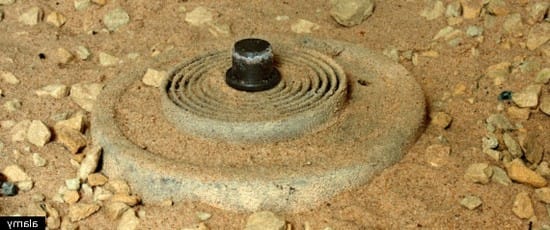
It costs as little as $3 and looks like a hockey puck. It was planted by insurgents fighting in one of the globe's multiplying civil wars, an instrument to terrorize the population into submission and deny arable land, rivers and roads to the enemy. It probably will be stepped on by a child at play or a woman at work, killing or maiming them horribly. Welcome to mine warfare in the nineties. In an era of nuclear smuggling and resurgent terrorism, the antipersonnel land mine might seem trivial and antiquated. Yet four times every hour, someone -- usually in the developing world -- triggers one. The staggering and largely hidden toll has led some to call it "a weapon of mass destruction in slow motion." There are 85 million to 90 million uncleared land mines in 62 nations around the world, according to a State Department report. Some estimates are twice that. The mines will lie in place, active for decades -- often long after the conflict has ended. To find and clear them requires hours of painstaking, life-threatening work and costs between $300 and $1,000 per mine. Given their threat to civilians and ability to pollute vast swaths of land for decades (see sidebar), land mines deserve the same stigma as chemical and biological weapons, argue human rights advocates. U.N. Secretary-General Boutros Boutros-Ghali, the International Committee of the Red Cross (which rarely takes public-policy stands) and such conservative publications as the Economist and the Times of London have called for a ban. Yet the U.S. Army and other militaries oppose a ban, arguing that land mines have legitimate uses. Along the demilitarized zone between North and South Korea, for example, land mines perform guard duty that would otherwise require thousands of soldiers. Harsher critics of military policy note that land mines have long been a hazard to U.S. soldiers -- 7,400 American servicemen were killed in Vietnam by land mines and booby traps, the enemy's and their own -- and the danger will grow as the military finds itself increasingly involved in brushfire wars and peacekeeping operations. Land mines "can be an effective force multiplier for the most rag-tag Third World army," said Sen. Patrick Leahy, a Democrat from Vermont, in a Senate speech this summer. "A $3 land mine can blow the leg off a child as well as it can blow the leg off the most highly trained, well-equipped American soldier or peacekeeper, medical aide or missionary." An incident during the Persian Gulf War illustrates the seductive benefits and drawbacks of modern land mines. As a Marine artillery battalion moved through Kuwait in 1991, the lieutenant colonel in command was rattled by an approaching Iraqi convoy, aware of his exposed flank. He fired off a Fascam -- a type of munition known as a "Family of Scatterable Mines" -- which creates instant minefields at great distances. While the action kept the battalion safe from the Iraquis, it also immobilized the Marines; they had to wait for the mines to "self-neutralize." The international accord now governing land mines -- Protocol II of the 1980 Convention on Conventional Weapons -- generally is regarded as an abject failure. It covers only the use of land mines, not their availability, and is riddled with loopholes. It does not apply to internal conflicts, for example, which account for the vast majority of land-mine use. International negotiations are under way in Geneva to strengthen the accord when it comes up for review in September 1995. The Clinton administration wants to extend the treaty's reach to civil wars and add a provision that would ban land mines that are not programmed to neutralize themselves. Proponents of a land-mind ban predict that any proposal to permit only self-neutralizing mines will simply shift production of cheaper versions to the developing world. Self-neutralizing mines are far more expensive and use technology available mainly in industrialized nations. There is little incentive for Third World insurgents to make the switch. "We're definitely going to have to think of inducements," acknowledges one State Department official. "You could quickly see how this could be an industrialized world vs. the developing world, North vs. South kind of issue." Furthermore, self-neutralizing mines do not always work as designed. Army officials told the Arms Project, part of Human Rights Watch, that the failure rate of such mines is between one in 10,000 and one in 100,000. However, some experts estimate that the rate could be as high as one in 10. "You don't know which one of the 10 didn't deactivate," says Rep. Lane Evans, a Democrat from Illinois who has introduced legislation urging the administration to seek an international ban on land-mine use and production. In late June, Secretary of State Warren Christopher and Defense Secretary William Perry wrote to Leahy urging him to withdraw his measure imposing a one-year moratorium on U.S. production and procurement of antipersonnel mines. The proposed legislation would undercut the future U.S. negotiating position with other countries, they argued. State Department officials, who are preparing alternative proposals for an international accord on the land-mine trade, believe that a complete ban on production and stockpiling is unrealistic and, in any case, would take too long to negotiate. (One less ambitious proposal is modeled after the Missile Technology Control Regime, a 1987 agreement that calls for largely voluntary controls on technology associated with advanced ballistic missiles.) Prodded by Leahy, Evans and other lawmakers, however, the Clinton administration has taken the lead in international diplomacy on the issue. Last year, Congress extended the U.S. moratorium on antipersonnel landmind exports through 1996. In December, the U.N. General Assembly unanimously adopted a U.S.-sponsored resolution calling for a similar moratorium. Since then, with U.S. urging, 15 nations -- including such major arms producers as South Africa and Slovakia -- have banned such exports. Five other nations have taken more limited actions. In what was regarded as a major victory for antimine forces, Italy announced in June that the country would ban the production and export of antipersonnel mines. The announcement was a surprise: Italy was one of the world's leading mine producers. In 1991, seven employees of Valsella, which is owned partially by Fiat, were convicted of illegally selling 9 million antipersonnel and antitank mines to Iraq. Despite such developments, the outlook for halting the proliferation of land mines, let alone cleaning up the millions already in the ground, remains clouded. Roughly 1 million new mines are sowed each year, 10 times the number that are cleared, says Jody Williams of the Vietnam Veterans of America Foundation. The Geneva talks appear to be moving slowly, mired in disputes over semantics and sovereignty. "Quite honestly, it continues to be a losing battle," says Williams. "That's why we argue a ban is absolutely critical to effect real change." Old Land Mines Never Fade Away Land mines do more than kill and maim. Even when conflict has ended, millions of land mines lie hidden, rendering vast swaths of territory virtually uninhabitable. According to humanitarian groups and others, mines have become a major barrier to reconstructing war-torn societies: They prevent refugees from returning home and impede efforts to establish agriculture and rebuild roads and other infrastructure. Statistics tell the story: * One-third of Angola is said to be contaminated by land mines, the legacy of a 20-year-old civil war. * One out of every 236 Cambodians has lost a limb to a land mine incident. Four million uncleared mines remain, more than 50 per square mile. * Libya, Vietnam, Germany, the Falkland Islands and other places still have major problems with unexploded land mines and ordnance that, in some cases, are more than 50 years old. "Land mines may be the most toxic and widespread pollution facing mankind," notes a 1993 State Department report titled Hidden Killers. Even in wealthy, oil-rich Kuwait -- which, thanks to Iraq, may be the most densely mined nation on Earth -- it will take decades to clear the 5 to 7 million mines that remain from the Persian Gulf War. The U.S. government has set aside $25 million in fiscal year 1995 for minesweeping projects in Cambodia, Afghanistan, Nicaragua, Mozambique, Eritrea, Ethiopia, Honduras and Costa Rica. A central part of the initiative is to "train the trainers," so that expertise in mine clearance is passed on and the affected country can take over the effort. In many places, workers often use little more than sticks, sitting on their haunches and poking at the ground a few inches at a time. Not surprisingly, casualties are high. The Clinton administration will spend an additional $10 million for research on technologies to find and clear land mines more quickly. Experts are pessi-mistic that they will ever find a "silver bullet" that will neutralize landmines as a weapon, however. Increasingly, guerrilla groups are em- ploying high-tech mines with antitampering devices and virtually no metal parts, inhibiting detection, according to a 1993 joint report by Human Rights Watch and Physicians for Human Rights: "Mine clearance technologies have not kept pace with advancing mine technologies, and are not likely to do so in the future." |
| < Prev | Next > |
|---|