Home
Forging a Peaceful New Century
Forging a Peaceful New Century.


by MICHAEL RENNER


"The 20th century was the century of warfare. The worm must endeavor to make the 21st the century of demilitarization and conflict prevention."


PEACE AND SECURITY POLICY in the 21st century will have to deal with the lingering legacies of the 20th century--acceptance of huge accumulated arsenals and the use of force as an arbiter of human conflict--and with new challenges as well, such as internal conflicts arising from social, economic, demographic, and environmental pressures. These problems are intertwined. While the particular causes of the 20th century's wars and arms races may quickly become history, the leftover military equipment makes for such ready availability of arms of all calibers, particularly small arms, that recourse to violent measures in future disputes is far too easy. To forestall the likelihood of endless skirmishes and wars in the future, governments, intergovernmental institutions, and civil society groups will need to find renewed vigor to pursue demilitarization, conflict prevention, more inspired global institution-building, and greater grassroots engagement.


During the Cold War years, the recognition grew that traditional security policies--building national or allied military muscle--often yielded insecurity. A series of independent international commissions headed by world leaders such as Willy Brandt of Germany, Olof Palme of Sweden, Julius Nyerere of Tanzania, Gro Harlem Brundtland of Norway, and Ingvar Carlsson of Sweden prompted a fundamental rethinking of security. Out of these efforts evolved two closely linked concepts: common security (the view that, in order for one state to be secure, its opponents must also feel secure) and comprehensive security (the notion that non-military factors such as social inequity, poverty, environmental degradation, and migratory pressures are at least as important as military ones in determining the potential for conflict). Questions have been raised as to whether many sources of conflict today are at all amenable to military solutions, a perspective currently being discussed under the heading of human security.


The years since the end of the Cold War have seen a reduction in military spending; production, trade, and deployment of arms; and the size of armed forces. Yet, progress has been highly uneven across the world; substantial arsenals remain in place; there is no letup in the drive toward more sophisticated weaponry; and business in transferring both new and "surplus" weapons from one country to another is still brisk.


Fundamentally, little has changed as far as reliance on armed forces is concerned. The utility of military power has hardly been fore-sworn by the world's governments. The Clinton Administration asserts that today's instabilities must be combated by military means. Its request for an additional $112,000,000,000 for the Pentagon during the next six years (2000-05) reverses the trend of recent years and is sure to influence decision-making in other capitals around the world.


A key task in the 21st century will be to establish effective restraints based on three principles. These contrast sharply with the approaches underlying past and present policies: disarmament (as opposed to arms control); universal constraints on arms (as opposed to non-proliferation); and war prevention (as opposed to regulating warfare).


Although the world has pulled back from the nuclear brink, disarmament is needed as never before. There are still few internationally accepted norms to curb the production, possession, or trade of arms. Several decades of arms control efforts have yielded mostly weak numerical limits on the numbers of certain weapons that states may deploy, and no limits at all on many other kinds of arms. The list of weapons that have actually been outlawed since 1899, when the Hague International Peace Conference decided to ban expanding, or so-called dumdum, bullets, is extremely short compared to the list of unregulated weapons. Although the use of chemical weapons was banned in 1925 (a pact violated several times), nearly another 70 years passed before the 1993 Chemical Weapons Convention outlawed their production and possession. In 1995, the sale and use of blindinglaser weapons was banned, and a treaty prohibiting anti-personnel landmines, signed in 1997, came into force in 1999.


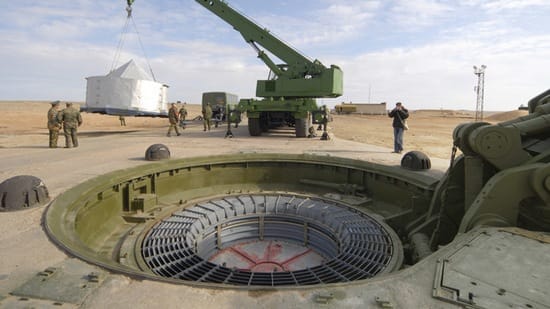
Now that there are no big-power confrontations and relatively few armed conflicts between states, an unparalleled opportunity beckons for far-reaching disarmament in both the nuclear and the conventional realms. Denuclearization--the establishment of a timetable to phase out and eventually eliminate all nuclear arms--is one of the pressing tasks in coming years. The nuclear "haves" not only insist that they will retain their arsenals indefinitely, they continue to pursue modernization programs, and their existing arsenals remain on hairtrigger alert. Moreover, the stakes are rising. India and Pakistan have joined the "nuclear club," and it is overly optimistic to assume that others will not eventually be tempted to reevaluate their policies and to acquire nuclear weapons as well. Even if no government is contemplating starting a nuclear war intentionally, other dangers lurk, among them accidental launchings of missiles and theft of nuclear weapons or related materials and technology by terrorists or non-nuclear states.


An equally urgent task is to adopt restraints on the conventional arms trade. Huge amounts of weapons have been dispersed all over the planet. Among the most worrisome aspects of this buildup is the widespread proliferation of small arms--the weapons of choice in today's internal fighting.


One measure long demanded by human rights organizations and other groups is a binding code of conduct to ensure that, at the very least, weapons are not exported to governments that fail to hold free elections, trample human rights, or engage in armed aggression. A voluntary code of conduct was adopted by the European Union in June, 1998, but it remains to be seen whether the region's governments will live by it or ignore it when the code proves inconvenient. Establishing effective, binding codes in Europe and elsewhere remains a crucial step toward peace. However, in the next century, it will be necessary to aim for an even more ambitious goal--establishing a normative presumption against trading arms altogether, so that such transfers are no longer seen as routine commercial transactions, but, rather, as highly unusual events.


It also is time to rethink the utility of large standing military forces and advance the norm that possession of an offensively armed military is unacceptable. Countries that face no obvious external adversaries may want to cut their militaries radically and refocus remaining forces on purely defensive tasks. Indeed, some may want to reconsider whether they need an army at all, joining the 20th-century pioneers Costa Rica, Haiti, and Panama in abolishing their standing armed forces. Unilateral measures by individual countries could create some badly needed momentum, but far-reaching progress likely would depend on a more systematic, multilateral approach. A nongovernmental organization (NGO) initiative, Global Action to Prevent War, proposing a four-phase process over 20-40 years to achieve major reductions in armies and their armaments, was launched at the Hague Appeal for Peace conference in May, 1999.


The second general principle concerns universality of norms. In order to be just and effective, constraints on armaments must apply to all states equally. This contrasts with the nonproliferation policies currently in vogue in Western nations--the idea of allowing a select (and self-appointed) group of countries to hold on to certain kinds of weapons denied to all other states. Nuclear arsenals are the most prominent example. The Non-Proliferation Treaty prohibits the acquisition of nuclear arms by nations that do not currently possess them--the vast majority of the world's countries. Yet, the nuclear weapons states have shown little inclination to fulfill their part of the bargain and begin serious negotiations for nuclear abolition. The advanced nations are working hard to establish a monopoly on sophisticated arms technologies (although this goal is often contradicted by their active non-nuclear export salesmanship). The upshot could result in a sort of global security apartheid system.


This kind of lopsided approach to security is not only unacceptable from the perspective of universality, it is unworkable in the long run. As long as one country or group of nations has access to a weapon, others will be tempted to acquire it as well. No matter what the true utility of the weapon in question may be, the very fact that one government prizes its possession signals to others that it must have direct military value, heighten a country's influence, or provide some other, less tangible, advantage. This may be a fool's game, but it is one that states have played for centuries. At best, pursuing such policies into the future is an enormous waste of resources; at worst, it could spawn new arms races and trigger regional or global instabilities.


The third principle, preventing war, also requires dramatic change. At the 1899 Hague conference, governments expressed their "desire to diminish the evils of war so far as military necessities permit," a wish that remained unfulfilled. Although war laws could be made more stringent, the past 100 years have demonstrated that there is an inherent limit to how effective they can be. Rather than trying in vain to make war a "chivalrous" affair, it is far more fruitful to focus on preventing violent conflict. Yet, while government leaders give occasional lip service to conflict prevention, far too little is being done to make it happen. For instance, in 1997, the newly established United Nations Trust Fund for Preventive Action Against Conflicts received soaring rhetoric, but scant funds.


Much could be accomplished by building an early conflict warning network, establishing permanent dispute arbitration centers in every region of the world, giving more backing to preventive diplomacy, and establishing a corps of skilled and experienced individuals to serve as roving mediators on behalf of the international community. Conflict prevention is not an exact science, to be sure; instead, it resembles a trial-and-error process. On the one hand, there will be cases when early warning of impending violent conflict turns out to be a false alarm. On the other, though, the international community would do well to have some redundancy built into the conflict prevention apparatus so that a variety of efforts aimed at warding off mass violence can be launched. Preventing the eruption of disputes into full-scale hostilities is by no means an easy task, but its difficulties pale beside those of ending fighting once extensive bloodshed has occurred.


Prevention


Of course, conflict prevention through mediation will not always work, so additional tools are needed. In particular, peacekeeping missions will have to be refashioned so that they can embody the true meaning of their assignment, instead of serving as last-minute fire brigades. In the course of the past few years, the world has come to associate peacekeeping with hapless efforts--too few people equipped too poorly and dispatched too late, unable to keep a peace that scarcely exists on the ground. What is needed is the creation of a well-trained, permanent force under UN auspices for preventive deployments. It would be dispatched in response to clear signs of imminent violent dispute, along national borders or even within countries. Such an intervention should not be seen as an end in itself, but be designed to provide space for mediation efforts.


In a fast-paced world that prefers lightning-quick action with decisive outcomes, there is aversion to the typically open-ended commitments that prevention and mediation require and the compromises and nuances without which conflict resolution is unlikely to succeed. Political leaders are tempted to assume that air strikes--such as those against Serbia intended to change its policy on Kosovo--offer a quick, clear-cut alternative, but this is a questionable proposition. Even where this policy has been executed in the most straightforward manner--trying to force Iraq's Saddam Hussein to come clean on his weapons of mass destruction programs, for instance--the result is ambiguous at best. International monitoring of Iraqi sites suspected of harboring prohibited weapons programs has all but ceased.


In Kosovo, "cruise missile diplomacy" was taken to its extreme. In the name of protecting human rights of Kosovar Albanians, NATO launched 78 days of intensifying bombing targets in Kosovo and throughout what remains of the former Yugoslavia. Although the alliance's air war succeeded in forcing Serbia to accede to NATO terms, it utterly--and predictably--failed to protect a single victim. Instead, the bombing policy sharply aggravated the humanitarian disaster by providing an excuse to Serb military and paramilitary forces to step up their vicious "ethnic cleansing" campaign. The mass exodus of refugees from Kosovo brought Albania and Macedonia to the verge of collapse, and the longer-term prospects for the region's stability remain unclear.


In the course of its bombing campaign, NATO increasingly targeted not just clear-cut military assets, but facilities that were essential to the functioning of a civilian society, such as bridges, highways, telecommunications, refineries, and power and petrochemical plants. These attacks not only killed thousands of civilians, they inflicted public health costs and environmental damage that are as yet untallied. Serb landmines and unexploded munitions present both immediate and longlasting dangers for the region's inhabitants.


Opportunities for conflict mediation were missed in the years leading up to the war, and the settlement that ended the bombing will not bring about reconciliation. Some Kosovar Albanians have returned, and much of the province's Serb population has fled, fearful of retribution and unpersuaded that NATO forces would protect them. Mutual fear and hatred have escalated to the point where peaceful coexistence is at best a desire for the distant future.


The painful truth is that NATO itself violated the UN Charter and the rules of warfare laid down in the Geneva Conventions. By, in essence, reaffirming the law of the jungle, the NATO bombing has troublesome implications for the rule of law in international relations. In the future, other states may seize on this precedent to defend unilateral uses of force.


Far-reaching disarmament, universally applied constraints on armaments, and vigorous conflict prevention efforts will go a long way toward addressing the more traditional aspects of a peace policy. To be successful, however, these steps will need to be linked with a broader human security agenda. Conflict prevention is not only about positioning peacekeepers between would-be attackers and their intended victims (though a few successful operations of that kind could have a salutary effect), but more fundamentally about recognizing and ameliorating the underlying pressures that lead to violent disputes in the first place.


At the core, the shift toward prevention calls for policies that are geared to strengthening the fabric of society and improving its governance. Central are goals like fair distribution of wealth and balancing of the interests of different population groups, adequate job creation, poverty eradication, and the preservation or restoration of ecosystems. These are urgent requirements in a world in which the simultaneous presence of tremendous economic growth and widespread inequity is driving environmental destruction, breeding explosive social conditions, and fueling ethnic antagonisms.


Governments will need to adopt policies better able to stem the degradation of watersheds and arable lands, conserve and protect critical natural systems, and pursue climate stabilization policies. Key to success also are measures to boost the efficiency with which energy, materials, and water are used. In developing countries where a large share of the population depends directly on the integrity and stability of their ecosystems, the benefits not only would be environmental, but would carry over into the social and political realms by helping to avoid the dislocations and distributive conflicts that go hand in hand with wholesale environmental destruction. Industrial nations' policies are critical as well, since they consume the bulk of the planet's resources and are thus, directly or indirectly, responsible for the preponderance of unsustainable mining, logging, metal smelting, fishing, and fossil fuel burning.


It is equally important that governments become more serious about fulfilling pledges to eradicate poverty, promote full employment, and reduce massive social inequality. At the 1995 World Social Summit in Copenhagen, it was widely recognized that social conditions are closely linked to issues of peace, but the summit's rhetoric has so far proved stronger than actual policy commitments. Only with strong NGO involvement will it become possible to translate rhetorical pledges into reality.


In an age in which capital-intensive technology and planetary-wide economies of scale combine to limit the potential for job creation even as the ranks of job-seekers keep swelling, a fundamental reassessment of employment policies is overdue. This concerns questions such as the choice of appropriate technology, the need to tax energy and resource consumption rather than labor, and the design of fiscal and subsidy policies. Budgetary priorities need reexamining as well; as long as massive resources continue to be invested in the military, for example, social needs will always be given short shrift.


National governments, though often embattled, can do much on their own to promote human security and reduce the potential for conflict. However, because human existence is increasingly shaped by both globalizing and localizing trends, there is a need both to promote greater international cooperation and give civil society a far greater role in setting the agenda.


From a human security perspective, what counts is whether the general well-being of the population is served without overexploitlng nature, leaving certain communities behind, or undermining local culture, customs, and norms. Global economic integration will not turn into a race to the bottom if strong environmental and social standards can be developed.


Human rights, broadly understood, are of growing importance in a globalizing world, as decision-making processes affect larger and larger numbers of individuals and communities in more and more profound ways. The world's political and corporate elites have been far more interested, and effective, in creating a global market structure than they have been in establishing three essential conditions that are critical to preventing globalization from becoming a continuous source of contention: making the most powerful market players more accountable; preparing the ground on which a global human community, not just a global marketplace, can flourish; and setting up sufficiently strong international institutions that can help advance global norms and safeguard the interests of the global human community.


The international institutions vested with the greatest degree of authority and power--the International Monetary Fund and the World Trade Organization among them--not only lack accountability in their decision-making, but sometimes devote themselves to the pursuit of economic growth at the direct expense of social, environmental, and human rights considerations. Grassroots activists have been working hard to change the way these institutions operate, but more reform is necessary.


Reforming the United Nations


Considerable expectations for achieving and safeguarding the global community are being pinned on the United Nations, whose various departments and agencies are involved in many activities crucial to improving the welfare of people. Yet, the UN receives scant resources and commands little political power. Half a century after its founding, the organization that was set up to prevent recurring war is increasingly in danger of being emasculated, particularly by U.S. reluctance to pay its dues. Because the entire UN system-headquarters, specialized agencies, and peacekeeping operations--is owed about $3,600,000,000 in outstanding dues from member states, it has languished in financial crisis for several years. In the new century, governments will need to provide full and generous funding to the UN if they want it to be a more effective voice for peace than it has been to date.


To that end, reform is as essential as money. The Security Council, for instance, is increasingly anachronistic in its composition and central workings. Although discussions have been held for years and there is no shortage of reform proposals, no consensus on the specifics exists. The permanent members are highly reluctant to relinquish or water down any of their privileges, especially their veto power. If they succeed in blocking timely change, they will further increase worldwide resentment of outdated privileges. Since the Council relies on the willing cooperation of the world's nations, a rejection of reform may compromise its authority and effectiveness over time.


Because security policy will increasingly need to move beyond military issues in the next century and concern itself with the social, economic, demographic, and environmental pressures that are at the root of most conflicts, the United Nations system as a whole will be critical to success. Like the Security Council, it needs reforming, and, as is the case with Council reform, no consensus has emerged from among an endless number of reform proposals--some intended to strengthen the UN, others to limit its role.


One of the most important challenges is to make it less an organization of government representatives and more one of the "peoples of the United Nations," as the organization's charter puts it. As mentioned earlier, NGOs are already playing a growing role at many international venues and conferences, but their rising influence will need to find clearer institutional expression at the UN itself, perhaps moving toward a multi-chamber system and adding to the General Assembly one or more assemblies that are more broadly representative of each society. This could entail a parliamentary chamber (with representatives elected directly in each nation, as the members of the European Parliament are) and a forum of civil society that includes representatives of labor, environmental groups, and others. Such a change would not be an entirely revolutionary concept--the International Labor Organization has long had a tripartite structure, bringing together representatives of government, business, and labor.


Impatient with the failure of governments to promote conflict prevention and peace building, NGOs--or civil society organizations as they are increasingly called--are playing a more and more assertive role on the local, national, and international levels. In an age in which peace and security concerns are focused more on internal than on interstate matters, it is only sensible that civil society should be an active participant.


Recent years have seen the emergence of working coalitions that, on an issue-by-issue basis, bring together NGOs with like-minded governments. The anti-personnel landmines campaign is a prominent example of this phenomenon. With the support of countries like Canada, South Africa, Belgium, and Norway, the campaign succeeded in putting landmines on the global agenda, hammering out an international treaty banning these devices, and bringing it into force at a speed far faster than any other arms treaty in history.


Similar themes reverberate in the efforts to establish an International Criminal Court, the gathering campaign to counter small arms proliferation, and the Middle Powers Initiative (an endeavor to encourage nuclear-weapons states to commit to practical steps toward the elimination of their atomic arsenals). Whatever their eventual outcome, these efforts are helping to revolutionize the process of international policymaking by infusing it with human rights, humanitarian, and human development concerns to a far greater extent than has been the case to date.


This new "pulpit diplomacy" regards NGO activists as a vanguard of change, opens traditionally quiet (and often secretive and slow-moving) diplomacy to far greater scrutiny and mobilizes public opinion, and frequently takes the initiative from the big powers, putting them into the unaccustomed position of having to play catch-up. Soft power, as it is also called, is based on the notion that human security, not state security, should be the organizing principle of peace policy. It regards military force as having declining utility and emphasizes the power of ideas and the promulgation of new norms over the power of weapons.


The 20th century was the century of warfare. The world must endeavor to make the 21st the century of demilitarization and conflict prevention.


Michael Renner, a senior researcher with the Worldwatch Institute, Washington, D.C., is the author of Ending Violent Conflict.
 
< Prev   Next >
© 2010 Term paper / research paper writing service