
- July 18, 2015
- Posted by: essay
- Category: Argumentative and Controversial
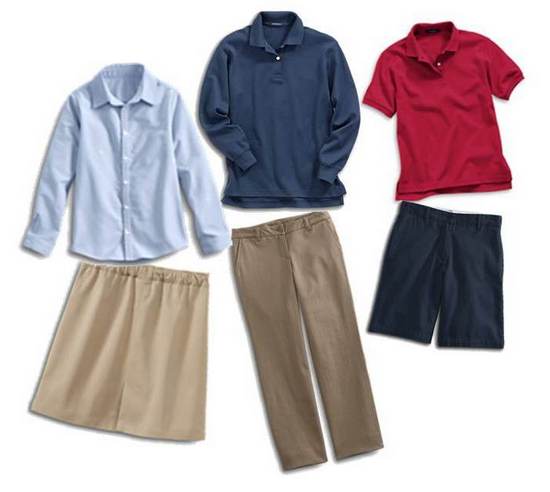
Is wearing a uniform in school a necessary requirement? This question is asked by thousands of children, parents and teachers in different corners of the world. Why has this question become so vital in recent years? Why the society cannot come to a reasonable compromise? Probably, the reason for introducing dress code in schools lies in a desire to achieve group unity and deprive children of an opportunity to self-express. Dress code in school is a controversial issue that is still under discussion. There are several arguments in favor and against the dress code in schools as will be analyzed further.
As for the arguments in favor of a dress code in school, it needs to be noted that first of all a dress code creates a business-friendly atmosphere during the lesson. It is common knowledge that before dress code was introduced in schools, children had been able to attend classes in any clothes. Remarks from the side of school teachers and administrative staff do not always help to deal with the problem of how children should be dressed at school. That is why a unified standard of clothes for school-children has been elaborated in order to solve this problem.
One more argument in favor of dress codes in schools is the fact that a standard uniform helps to mitigate social inequality. Every class consists of children with different income. Some parents buy fashionable and expensive clothes for their children, while others buy only the cheapest ones. For this reason, children from poor families feel insecure, and their self-esteem is diminished. At the same time, children from well-to-do families tend to self-express at the expense of money given by their parents. None of these situations are beneficial for a harmonious development of a child.
Furthermore, dress codes in school help to instill a good taste in children, so that they learn to wear “dress for success”. There is no doubt that teenagers’ preferences in clothes are quite marginal. At the same time, the formation of a good taste in clothes directly depends on how parents bring up their children. However, not all parents can instill a good taste in their children. That is why a dress code in school may help a child to find their way in the world of fashion.
As for the arguments against the dress code in schools, it should be mentioned that school uniform deprives children of individuality. Day after day children have to wear the same clothes along with their classmates. Is it what every teenager dreams about? Surely not. In today’s world teenagers have an opportunity to create their own style for a reasonable price, and many of young people want to self-express by means of wearing fashionable clothes. However, they are deprived of such an opportunity, although they can surely dress the way they like outside the school.
Furthermore, strict uniform is not always comfortable and practical to wear. School children tend to move much playing games and running. However, school uniform makes their activity quite complicated as there is a risk of damaging the uniform. Little children tend to be extremely active, but because of the necessity to wear uniform, they have to suppress their activeness and behave modestly. Finally, buying a uniform is expensive, and even if parents buy a cheaper alternative, they will have to “pay twice” as cheap uniforms are usually made from low-quality materials. A common school uniform is made from natural materials with some portion of synthetics. However, uniforms made from such materials are very expensive, which is associated with additional costs. Many parents cannot afford buying a high-quality uniform. This leads to a situation when their children have to wear low-quality clothes that negatively affect their health.