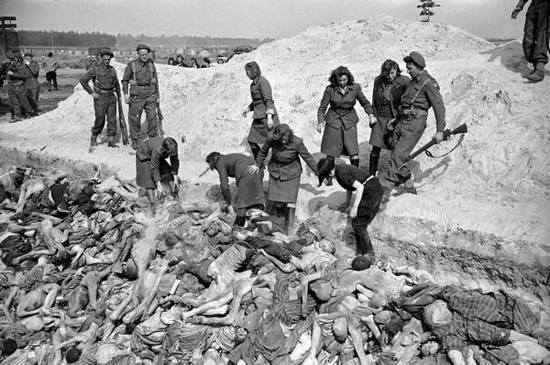
|
by Jr. Marouf Hasian In the last several decades, the Holocaust has become one of the defining moments in many domestic and international histories. For some, this new found respect for the Judeocide (Mayer, 1988) has been cathartic for both individuals in communities, in that it provides evidence that audiences around the world are rethinking the significance of the World War II narratives of bystanders, perpetrators, and victims. The growing popularity of films (Lanzmann's Shoah, 2000; Spielberg's Schindler's List, 1993), books (Keneally, 1993), monuments and memorials (Cole, 1999; Zelizer, 1998), and video collections attest to the fact that entire cultures are dedicated to the preservation of what Douglas (1998) has called "responsible memory" (p. 68). These discussions obviously influence the ways that a host of international communities will talk about the scope and limits of freedom of expression in national and international contexts. Even those who do not doubt the facticity of the Holocaust deliberate over the question of who should be designated the responsible witnesses for remembering the Final Solution (Conan & Rousso, 1998; Douglas, 1998). The revival of interest in Holocaust remembrances spawned a parallel growth in "revisionism" or "denial," asking societies to reassess the way that they think about Hitler's role in the "Final Solution," the facticity of the evidence collected at Nuremberg, and the existence of gas chambers at places like Auschwitz (Lipstadt, 1994). (1) Stern (1993) noted that although most of this denial is "widely ridiculed," it nevertheless has "appeared in many institutions" (p. 10). Yonover represented the views of some academic and lay observers outside of the United States when he argued in 1996 that "Holocaust denial" and "anti-Semitic language" are forms of hate speech that need to be proscribed by the state (pp. 93-94). Several years earlier, Jones (1994) argued that free speech absolutists simply did not understand that denial is "as potent a weapon" as charges of "witchcraft in times past" (p. 180). (2) Are these claims warranted? Decision makers interested in preserving Holocaust memories are therefore faced with the question of how best to respond to such commentaries. Should we follow the lead of nations like Canada, Germany, and Israel and restrict this type of hate speech? Do these Holocaust denials constitute "false facts," examples of "intentional infliction of emotional distress" that deserve to be outside the pale of First Amendment protection? (Douglas, 1998, p. 69). Should we avoid debating such revisionists for fear of providing them with the very forums that they seek? Should the Internet be regulated for content in order to halt the spread of "Holocaust denial?" (3) These are not idle speculations because of the pragmatic consequences. Given the complexities of these issues, scholars interested in studying Holocaust memory work make choices about the questions that they focus on, the artifacts that they select for analysis, and the perspectives that they want to take. In this particular essay, I provide a rhetorical analysis of the famous Irving v. Penguin & Lipstadt trial (2000) as a way of looking into the question of what role court proceedings play in the creation of Holocaust collective memories. Obviously, as a matter of both descriptive and normative realities, court participants are only some of the players involved in the complex symbolism of public memory work, but researchers need to be cognizant of the disproportionate power that influential judicial commentaries have in our marketplace of ideas. As Douglas (2001) explains, there is a "crucial difference between using the law to clarify or elucidate the historical record," and "relying upon the law to police a history that has already been adequately clarified" (p. 256). The jurists, lawyers, and other scholars who evaluate the veracity of competing Holocaust memories may know about the problematics of "law-office" histories--histories that are based on "the selection of data favorable to the position being advanced without regard to or concern for contradictory data or proper evaluation of the data proffered" (Schneider, 2001, p. 1542)--but they have little control over audience perceptions of these decisions. When legal standards are used in courtroom room debates that present both dominant and subaltern histories, when they take into account all of the evidence, and when they avoid "winner-take-all adversarial presentations of history" (Schneider, 2001, p. 1542), then participants in courtroom dramas have used commendable "conscientious" standards. Unfortunately, some court proceedings have to be conducted under such severe rhetorical constraints that decisions are rendered that circumscribe some forms of criticism. Watt, for example, has worried that the Irving decision will "drive the Holocaust deniers underground," at a time when we "need to have this stuff out in the open ..." (quoted in Gibson, 2000, p. 25). As I argue below, the unique nature of British libel proceedings, when combined with particular extra-legal circumstances, created the type of legal and cultural milieus that impacted both the legal and public discussions of Holocaust memories. Communication scholars are uniquely qualified to look into the problematics of these constraints, because they have been attentive to ways that our "rules of law" operate within the broader "rhetorical culture" (Condit & Lucaites, 1993, p. xiv). A number of interdisciplinary scholars have commented on the symbolic importance of trials for social judgment (Bennett, 1978), the narrativity of judicial texts (Cover, 1983), and the constitutive language that helps to create legal communities (White, 1984), but we are just beginning to explore some of the inevitable tragedies that are a part of our "judicial practices" (Lewis, 1994, p. 4). Given the multiple crises of representation that are involved with Holocaust historiography and memorializing, we need to recognize the selective nature of the "rhetorical history" (Condit & Lucaites, 1993, p. xvii) that is being produced in some Holocaust libel trials. In order to defend this position, I employ a type of rhetorical criticism that looks at some of the contested legal memories that appear in the trial transcripts of the David Irving v. Penguin Press & Deborah Lipstadt trial (2000). (4) While the jurists in the case tried to warn outside observers that this was not a case about the facticity of the Holocaust (Gray, 2000), this was not the general impression that was left with either members of the media or the public. What was at stake in this case, noted one writer for the Times of London, "was whether one of the blackest chapters of 20th century history actually happened, or is a figment of imaginative and politically motivated Jewry" (Hamilton, 2000, p. 3). Other observers characterized this as a clash between the defendants' right to publish particular materials and the claimant's right to have an untarnished reputation (Guttenplan, 2001). Such polarized frameworks overlook the symbolic complexities of this situation. This was a libel case that ended up in British courts because a self-taught historian by the name of David Irving claimed that his reputation and livelihood had been damaged when Penguin Press decided to republish Deborah Lipstadt's book, Denying the Holocaust (1994). In her book, Lipstadt argued that Irving was an ideologue who associated with right wing groups. She furthermore claimed that Irving manipulated historical data in order to advance his political agendas (pp. 161-163, 179-181, 232-234). In her eyes, the fact that he was sometimes considered to be a respectable historian made him one of the most dangerous "deniers" in the world (Guttenplan, 2001, p. 1). Lipstadt's assertions about the denial movement's threat to "historical knowledge and memory" (Evans, 2001, p. 2) were being advanced a time when a growing number of interdisciplinary scholars have commented on the nexus that exists between history, law, and collective memories (Hom & Yamamoto, 2000; Levinson, 1998; Sarat, 1999; Sarat and Kearns, 1999). The Irving case thus provides us with a fascinating illustration of the selective nature of legal decision making, and the alleged fragility of World War II memories. Given the fact that the "documentation of the Holocaust is vast," that "the killers never denied the crime," and that "the Germans kept meticulous records" (Berenbaum, 2000, p. B-7), the appearance of Holocaust denier trials are relatively rare occurrences. However, when deniers do appear, it is said that they create an incredible amount of legal and public controversy (Fish, 2001). Such trials also raise issues about the nature and limits of academic freedom and individual freedom of expression. For example, Lipstadt had implied that "`the deniers' represent a clear and present danger" because they obfuscate the "lessons to be learned by future generations" (Gray, 2000, p. 3). O'Brien, Britain's Home Officer Minister, told reporters in January 2000 that at one time the government was considering criminalizing such hate speech, but this idea was dropped because such legislation could not easily "strike a balance between outlawing such offensive statements while ensuring that freedom of speech is not unduly restricted" (Johnston, 2000, p. 5). Such a stance, however, does not preclude the possibility that there may be civil suits that involve revisionist or deniers, and the 32-day long Irving trial provided us with a wealth of information on British libel law, the historical events that led up to Hitler's seizure of power in Nazi Germany, and various memories of the Holocaust. Unfortunately, some of the rules that govern British libel law proceedings created a winner-take-all atmosphere, where the jurists were being asked to be the arbiters of certain "truths" about the Holocaust. In this particular essay, I analyze key newspaper accounts and transcriptions of statements that appear in several different parts of the Irving trial (Counsell & Co., 2000), because these "prepared speeches of advocates" are a key part of the "complex dramatic interaction within the trial as a whole" (Schuetz & Snedaker, 1988, p. xiii). As Sarat (1999) recently observed: Each transcript gives potent evidence of the perspectivism and polyvocality of human experience and of the point-counterpoint in which competing renditions of events, motives, possibilities sit side by side.... And remembrance is indeed the very stuff of the trial transcript. The transcript as text asserts itself as history against memory. It is the verbatim record of a present soon to become a past.... In this sense, the transcript records the rhetorical performances of others all the while denying its own status as rhetoric. In doing so, it becomes an important site for observing law's anxiety about memory against history, rhetoric against truth. (Sarat, 1999, p. 356) When various audiences are inviting courts to do more than they can do in these complex memory wars--to settle once and for all the facticity of the Holocaust, or versions of the narratives surrounding the Holocaust--then they are buying into a version of the ancient quarrel between "rhetoric" and "truth." By decoding some of the key legal arguments that were advanced in the opening, middle, and closings of this seminal proceeding, I can show many of the legal and social entanglements that are involved when participants in such trials are asked to moderate, regulate or direct particular social actions (Lewis, 1994, p. 4). In order to accomplish this task, this essay is divided into four major segments. In the first portion of the essay, I illustrate how the requirements of British libel laws forced the litigants in the Irving case to debate about some of the histories and memories associated with the Holocaust. The second segment augments this analysis by providing a chronology of some of the claims of Holocaust revisions have made between 1945 and 1995. The third part describes some of the key arguments that were advanced during different parts of the trial itself. The concluding section then looks at some of the rhetorical choices that were made by the judge in the case, and comments on the costs and benefits of British libel trials and the proscription of Holocaust denial materials. AN OVERVIEW OF BRITISH LIBEL LAW AND THE BURDENS OF PROOF IN THE IRVING V. PENGUIN & LIPSTADT CASE In this particular libel case, Irving, as "claimant," was arguing that both Penguin Press and Deborah Lipstadt had "vandalized his legitimacy as a historian" (Gray, 2000, p. 10). It was his contention that both of the defendants had hurt his reputation and his pocketbook, and that they were primary agents in a larger campaign against him, involving boycotts of his books and other forms of persecution. Irving self-identified himself as a dissident historian (or "redefiner") who had a fight to express his own views about Hitler and the gassings at Auschwitz. (5) He wanted to be able to express his views without having to be labeled a revisionist or a denier. The defense teams tried to counter Irving's claims by arguing that scholars from a number of fields had already established the "facts" of the Holocaust, and that Irving's "opinions" were not only erroneous, but potentially dangerous. Unfortunately, given the specifics of British libel law, they had to engage in the very type of winner-take-all commentaries on history that were being critiqued by Schneider (2001). British courts provide a tempting forum for plaintiffs interested in filing libel suits because the combination of "the allocation of evidential burdens," the lack of a recognition of a public figure defense," and the "decisive role given to juries in defamation cases" has meant that "exorbitant damage awards have become a commonplace feature of English libel litigation" (Vick & MacPherson, 1997, p. 647). Under British libel law, a claimant (plaintiff) has to prove: (1) that the defendant actually published the allegedly defamatory remarks; (2) that the statement clearly refers to the plaintiff; and (3) that the words in question have a defamatory meaning (Mulvihill, 2000, p. 221). Evans (2001) noted that even statements that are made in good faith can still be considered libelous (p. 28). A claimant who establishes a prima facie case is in good shape under British law because there is now a presumption that this defamatory material is "false." Irving merely had the burden of showing that "as a matter of probability" the passages of which he complains are defamatory, meaning that the "ordinary reasonable reader of Denying the Holocaust would think the worse of him as result of reading those passages" (Gray, 2000, p. 11). (6) If Irving brought this case in an American courtroom, he would have had to "prove that what Lipstadt wrote about him was false" and he would have had to show "that she knew it was false" (Guttenplan, 2001, p. 2). (7) Smolla (2000) recently noted that a British cause of action for defamation remains a "strict liability tort," in which publishers can be held liable "even for statements that where honestly believed to be true, and published without negligence" (sec. I, p. 9). Given these legal constraints, one can easily see why many observers of this trial worried that Irving had a better than even chance of winning his libel suit. In this particular case, the defense teams for Penguin Press and for Lipstadt decided that they were not going to expend a lot of energy disputing either the publication or the defamatory nature of these words. Instead, they decided to counter the claimant advantage by deploying an absolute defense to a defamation claim-in this case the defense of "justification." Under Section 5 of the British Defamation Act of 1952, a defendant can avoid liability if he or she can show that the statements that were made about a plaintiff were justified or "substantially true," and that any unproven allegations "did not materially injure the plaintiff's reputation" (Mulvihill, 2000, p. 222). This was both a risky and aggressive defense, because it meant that the defense now had the burden of showing that Lipstadt had been telling the "truth" when she called Irving an "apologist for Hitler," a person who "resorted to the distortion of evidence," and an individual who applied double standards in his treatment of the historical evidence (Gray, 2000, p. 15). These unique libel requirements would inevitably turn the Irving trial into a forum that witnessed the advocacy of varying standards of historiography and competing Holocaust memories. Judge Gray was asked to make some judicial judgments about the facticity of key claims, the motivation that informed the work of Irving and Lipstadt, the acceptable narration of those facts, and historical standards that would be used in this case. When rhetoricians make evaluative judgments about legal transcripts and judicial opinions they need to openly admit motivations and biases, and I am worried about the precedential value of this case. If this case is treated as only one of the sites for the formation of collective legal memories, then I have no problems with the decision, because it might serve as a way to open up debate with revisionists and other commentators. Unfortunately, it may be viewed as vehicle for the containment of particular memories, where the dominant perceptions of the Holocaust, or the most popular standards for historical inquiry, help to silence subaltern voices. As Hitchens (2001) recently observed, the Irving case was more than simply a "morality tale, in which truth emerges as the stainless winner over bigotry and falsification" (par. 25). This was not just a case that involved Lipstadt's right to label Irving a "denier"--it was also a proceeding that involved commentaries on the rights of freedom of expression for those who espouse what appear to be strange and radical views. Did Irving have the right to make arguments about the lack of documentation of the Auschwitz gassings, or to engage in epistemic debates about the scope and nature of the Nazi "Final Solution?" Was this British court being placed in a position where they had to make decisions about both the facticity of the Holocaust and the legitimacy of Irving's historical methods? While I do not share Irving's views, I am worried about the rush to judgment in a case that instantiates particular views of history or historiographic methods as "the" acceptable forms of World War II memory-work. The next section illustrates that this British court was not the first judicial body that had to deal with these conundrums. CONTEXTUALIZING HOLOCAUST DENIAL: A RHETORICAL HISTORY OF REVISIONISM BETWEEN 1945 AND 1995 Although many of the events that made up the "Final Solution" began years before 1945 (Mayer, 1988), it would not be until the end of the war that the "Holocaust" was "really discovered" (Hilberg, 1994, p. 166). There are several reasons for this. At Nuremberg, the focus of attention involved the aggressive policies of the Nazis, who were depicted as violators of international legal norms. At the same time, there were very few press clippings that openly discussed the Judeocide, and many politicians were incredulous when they heard the first reports that came from European resistance movements. Hilberg (1994), one of the leading experts on the Final Solution, noted that: The British found out about the Holocaust when they captured Bergen-Belsen, a dumping ground in which tens of thousands of Jews who had been inmates of Auschwitz and elsewhere were dying of hunger and typhus. The United States encountered the Holocaust in Dachau, Buchenwald, and the Mauthausen complex, where U.S. troops found emaciated bodies, many of them half their normal body weight. (p. 166) Tens of millions of human beings lost their lives in World War II and few investigations looked into the specifics of the "Final Solution." Many former victims wanted to start their lives over again, or put away their traumatic memories. Friedlander (1992) noted that this was all changed "by the debates from 1951 on concerning the reparations agreement with Germany, the Kasner trial and finally the Eichmann capture and trial" (p. 48). For many years, some of the survivors of the Holocaust kept the memory of these atrocities alive in the West through their witnessing, but it would take many decades before various international publics were willing to cope with the problematics of such repressed remembrances. By the mid-1980s, there were some signs that incremental changes were taking place. For example, in West Germany, the advent of the Historikerstreit meant that German scholars were once again willing to debate the role of Nazism in the deep structures or longitudinal histories of their society (Eley, 1988). During this same period, more than a dozen nations had passed legislation that prohibited some form of hate propaganda (Yonover, 1996, p. 78). (8) Eventually, there had to be those who were unwilling to accept some of these dominant cultural shifts in Holocaust memories. In the mid-1980s, Americans witnessed an epic judicial struggle over Holocaust denial when Mel Mermelstein decided to sue a revisionist organization that called itself the Institute for Historical Review (IHR). At first the IHR had not received a great deal of media attention, but someone in that organization decided that they needed to generate publicity, so they began sending out "contest" letters that challenged Holocaust survivors to provide evidence that they had been gassed in places like Auschwitz (Lipstadt, 1994, p. 138). Mermelstein, an Auschwitz survivor, claimed that the Institute promised to pay $50,000 to anyone who could prove that there had been gassings (Douglas, 1998, p. 69), and he showed that his father and brother had been killed at Jaworzno, a sub camp of Auschwitz. Mermelstein had written several letters to various newspapers attacking the IHR and its claims, and the IHR director had responded by publishing an open letter that claimed that Mermelstein was "peddling the extermination hoax" (Lipstadt, 1994, p. 139). In spite of the fact that some Jewish organizations (including the ADL and the Simon Wisenthal Center) did not want Mermelstein to pursue his case, he decided to take his case to court in the early 1980s, and the Los Angeles Superior Court eventually ordered the IHR to pay Mermelstein $90,000. While Douglas (1998) has argued that this case shows that some Holocaust denial cases are legally actionable and compatible with the First Amendment, the Mermelstein decision is considered controversial because the presiding judge (Thomas Johnston) decided to take judicial notice of the fact that Jews had been gassed to death in Auschwitz (Lipstadt, 1994, p. 141). The next major Holocaust denial cases that followed in the wake of the Mermelstein decision were the Canadian Zundel trials. In 1985, a German citizen by the name of Ernst Zundel ended up in court because of his alleged violation of an old Canadian law (section 177 of the old Criminal Code) that proscribed the dissemination of "false news" (Hill, 1989). A private citizen by the name of Sabina Citron began the proceedings against Zundel, but the Canadian government quickly took over the case. Zundel was indicted for having made "a statement or tale known to be false and likely to cause mischief to the public interest in social and racial tolerance" (Freed, "Hate Law," p. 22). One of the pamphlets that he circulated argued that Israeli Zionists were using the Holocaust "hoax" to gain monetary help from the Germans (Heinrichs, 1988, p. 837). Zundel's circulation of anti-Semitism publications was considered to be a threat to Canada's multiethnic communities (Ranke, 1997, p. 23). Zundel argued that Canada's Charter provided him with rights of freedom of expression, and the lower courts split on the question of whether they were going to take judicial notice of the Holocaust. (9) During the first proceedings, the defense wanted to take about the problems with the Nuremberg trials, the problems with Allied readings of German memos, the facticity of Nazi crematoriums, and Hitler's knowledge of the Judeocide. (l0) The juries in the earlier cases found against Zundel, but Canada's Supreme Court overturned these convictions (Regina v. Zundel, 1992).Justice McLachlin, who wrote the majority opinion, concluded that the criminal code section that had been used to convict Zundel was unconstitutional and violated parts of Canada's Charter of Rights and Freedoms. She reasoned that since Holocaust denial literature did not involve a "violent act," the Charter provided protection for the "the right of a minority to express its view, however unpopular it may be" (Regina v. Zundel, 1992, p. 732). Her opinion was therefore in line with American court cases that distinguished between "hate speech" and "hate crime" laws. This did not sit well with observers who thought that Canadians had their own set of precedents, and that the judicial system needed to be aware of the social problems that came from the growth of the Holocaust denial movement. Irving had attended some of the Zundel proceedings, and in a matter of a few years he would be involved in his own Holocaust denial case. But this time, he would the one who would begin the litigation. A COMPARATIVE VIEW OF SOME KEY TRIAL ARGUMENTS AND JUSTICE GRAY'S DECISION IN IRVING It took Irving four years to get his case to trial, and when he got there he stood alone against a battery of defense lawyers, including Richard Rampton, Anthony Julius, Heather Rogers, and James Libson (Guttenplan, 2000, pp. 18-20). Because neither party in this case wanted a jury trial, Judge Gray was going to have to make decisions about findings of fact and the proper interpretations of British law. As if this was complicated enough, Irving also had to cope with the headaches that came with pre-trial discovery. The defendants were able to obtain thousands of materials from Irving's study, including diary entries, outlines of arguments, research notes, videotapes, audiocassettes, and records of speaking engagements (Evans, 2001, p. 31-32). Before he presented his opening remarks, he knew that several historians were going to appear for the defense, that there would be no cross-examination of former victims. The defendants were not going to repeat some of the mistakes that had been made by the Canadian prosecutors in the Zundel trials. During his opening statement (Counsell & Co., 2000, January 11) the claimant argued that Lipstadt and Penguin Press had damaged his reputation by labeling him a "denier," when he was in fact a dissident historian. Irving believed that: The word "Holocaust" is an artificial label commonly attached to one of the greatest and still most unexplained tragedies of this century. The label "denier" is particularly evil because no person in full command of his [sic] faculties, and with even the slightest understanding of what happened in World War II, can deny that the tragedy actually happened, however much we dissident historians wish to quibble about the means, the scale, the dates and the other minutia. Yet meaningless though it is, the phrase had become a part of the English language. It is a poison to which there is virtually no antidote, less lethal than a hypodermic with nerve gas jabbed in the neck, but deadly just the same. (p. 24) Irving claimed that there were some nations that did not respect the importance of freedom of inquiry, and that he was forced to live a shadow life, hounded by prosecutors in countries that had Holocaust denial statutes. In this imaginary world of intrigue, Irving was vilified for being "a pariah," an "outcast from normal society," the wearer of a "verbal Yellow Star" (Counsell & Co., 2000, p. 25). As far as he was concerned, all that he was trying to argue was that the "gas chamber shown to tourists at Auschwitz was indeed built by the Polish communist[s] three years after the war was over" (Counsell & Co., 2000, p. 28). Rampton was the barrister presenting the opening statement for the defendants, and he went right to the heart of the matter when he averred that Irving was not a "historian at all, but a falsifier of history" (Counsell & Co., 2000, January 11, p. 88). The defense argued that at one time Irving might have been a respectable historian who accepted the systemic nature of Europe's catastrophe, but by the time that Lipstadt wrote her book, he had already experienced a "sea change" in his attitude toward Holocaust (Counsell & Co., 2000, January 11, p. 94). Rampton noted that in the 1977 edition of one of Irving's books, the claimant had mentioned the existence of "extermination factories," but that in a 1991 edition of the same book, Auschwitz had been "transformed from a monstrous killing machine into a mere slave labour camp" (p. 94). The defense tried to create the impression that changes in Irving's own writings, and his involvement with the Zundel trials, were some of the key factors that led to the decline of his reputation. Rampton's (Counsell & Co., 2000) relatively short introductory remarks provide us with a nice illustration of what Bennett (1978) once called the storytelling role of legal persuasion, where judicial actors use some basic communicational forms of argument that "cut through the formal symbolism and procedures of trials" (p. 1). This defense barrister spent little time talking about intricacies of British libel law, because this was the time when he could explain to Judge Gray how Irving's opinions deviated from the findings of mainstream historians, and how the claimant had contributed to his precipitous fall. This was a very strategic approach to take, because it deflected attention away from Lipstadt's credentials and her defamatory remarks, and toward Irving's supposed extremism and fraudulent activities. At one dramatic moment on opening day, Rampton provided this often quoted fragment when he told the court: Mr. Irving calls himself an [sic] historian.... The truth is, however, that he is not an historian at all but a falsifier of history. To put it bluntly, he is a liar. Lies may take various forms and may as often consist of suppression or omission as a direct falsehood or invention, but in the end all forms of lying converge into a single definition, wilful, deliberate misstatement of the facts. Mr. Irving has used many different means to falsify history, invention, misquotation, suppression, distortion, manipulation and not least mistranslation, but those [sic] all techniques have the same falsification of the truth.... Mr. Irving is nowadays a Holocaust denier. By this I mean that he denies that the Nazis planned and carried out the systematic murder of millions of Jews ... (Counsell & Co., 2000, January 11, pp. 88-89) In sum, Rampton was going to try and convince Judge Gray that Lipstadt and Penguin Press were justified in labeling Irving a "denier." During the first several weeks of the trial, Irving's attack on the arguments of both Lipstadt and the Penguin lawyers created a situation where audiences heard days of testimony and cross-examination on such issues as Hitler's attitudes towards deportation of Jews in 1941, the impossibility of the massive gassings at Auschwitz, and the state of the physical evidence of the crematoriums. Irving claimed that Lipstadt was making unsupported assertions about the "systematic" nature of the Third Reich's policies, and when he was questioned by Rampton on the scope of the Judeocide, he answered that he believed that the Nazis had killed somewhere between one and four million Jews during the Second World War (Dodd, 2000, p. 6). Furthermore, it was his contention that there were logical reasons why millions could not have died in gas chambers, because this involved logistical and architectural "impossibilities." While Irving tried to give the impression that he was being persecuted for advocacy of unpopular opinions, his opposition tried to characterize him as a menace to society, an irrational demagogue trying to preserve Hitler's good name. For example, at one point in the proceedings, Rampton quoted from a transcript of a 1991 press conference where Irving had said, "the biggest lie of the lot, the blood libel on the German people, is the lie that the Germans had factories of death in which they liquidated millions of their opponents" (Dodd, 2000, p. 6). This type of quotation were used as evidence that supported the argument that Irving could reasonably be described as a denier. Irving was hoping that Lipstadt was going to be testifying in her own defense, but she refused to take the stand. This defense strategy served several rhetorical functions--it shifted attention away from questions about Lipstadt's familiarity with German documents, it prevented him from questioning her historical approach, and it also meant that his own work would be the center of attention in this libel case. Judge Gray did allow Irving to show a videotape of Lipstadt's appearance on a 1994 Australian television program, where she was equating revisionists with "people who believe the earth is flat, Elvis is alive and well, and there was no slavery" (Dodd, 2000, p. 6). Perhaps the claimant hoped that such visual displays would offset the damage that was going to come when viewers in the courtroom watched tapes of his own presentations in front of right wing organizations. Interestingly enough, during these earlier confrontations with Rampton, Irving was so concerned about his own reputation as a "historian" that he sometimes made some key concessions and admitted that he may have made some interpretative mistakes. For example, on the third day of the trial (Counsell & Co., 2000, January 13), he began talking about how some of his books had provided "incontrovertible evidence" that Hitler had ordered that there should be no liquidation of the Jews, but his adversaries got him to admit that the Fuhrer was only talking about a 1000 deportees traveling to Riga, Latvia. On that same day, the exasperated claimant had to listen while Rampton read from a Reich General Governor's diary entry that mentioned how "for us, the Jews are particularly useless.... We have approximately 3.5 million Jews. We cannot shoot them. We cannot poison them. But we have to be able to do something which will one way or another lead to their successful annihilation" (Donnelly, 2000, par. 12). Irving did his best to defend some of the actions of the German military forces, and he went so far as to argue that many of the Jews who traveled on these trains had "very substantial amounts" of food (Burrell, 2000, p. 10). He conjured up a war-torn world filled with disease, typhus, broken communications, and food shortages. While he admitted that many Jews lost their property and their lives, he attributed this to the general horrors of war, and he steadfastly refused to see these deportations as parts of any early annihilation scheme. On January 17th, he told Judge Gray that he believed that the "system ended when the trains arrived. The system put the victims on the train and sent them to the east with food and equipment to start a new life. Once they arrived, the system broke down and the murders stepped in" (Burrell, 2000, p. 10). At this point in the trial, Irving should have spent time talking about how many mainstream scholars were also making these types of arguments, but once again he only occasionally referred to the work of other researchers. During the second week of the trial, Rampton and the other members of the defense team spent dozens of hours presenting evidence and cross-examining Irving on issues related to the shootings and gassings of millions of Jews between 1941 and 1944. The defendants brought into the courtroom mounds of records that detailed the daily transactions of key German officials and railway plans for hundreds of deportations. The lack of eyewitness testimony meant that much of the trial was going to involved debates over the interpretation of thousands of documents, and sometimes Irving appeared to be in his element. For example, he constantly complained about how his opponents were arbitrarily mixing and matching the historical and contemporaneous meanings of words like "Entfernen" (to remove), "Vernichten" (annihilate and destroy) and "Ausrotten" (liquidate) (Counsell & Co., 2000, January 24). In spite of the fact that all of the major participants had made claims that the Holocaust was not going to put on trial, there seemed to be no way of avoiding a debate over the facticity of the gas chambers at Auschwitz-Birkenau. For example, on January 24th, 2000, Rampton and Irving talked about everything from the chemical testing of cyanide (Counsell & Co., 2000, p. 35) to the alkaline content of concrete (Counsell & Co., 2000, p. 53). Sometimes matters got so complex that Justice Gray had to intervene to clarify points or move the discussion along. Note this illustrative exchange between the adversaries: Rampton: Customary to use 8 grammes of Prussic acid per cubic metre? Irving: Hydrogen cyanide supplied. Rampton: Nothing about pellets. So I am right, am I not? Irving: I do accept the point that it takes less Zyklon B or hydrogen cyanide to kill the vermin in fumigation changers at lower concentration than it does to kill human beings. I accept this point. Rampton: If you look at the Leuchter Report, Mr. Leuchter knows this, does he not? If you look at page 12, right hand column, the toxic effects of HCN gas under the bold heading, "medical tests show that a concentration of hydrogen cyanide gas in an amount of 300 parts per million in air is rapidly fading. Generally for execution purposes concentration of 3,200 parts per million is used to ensure rapid death." Mr. Irving, that has nothing to do with this case, has it? Irving: I am lost. Justice Gray: I am completely lost (Counsell & Co., 2000, January 24, pp. 69-70). Later on, Rampton reminded the court that he was trying to show Irving's "state of mind" and his "standards" for truth in historical debates (Counsell & Co., 2000, p. 78), but by the end of the day he was once again attacking Irving's views on Zyklon B, delousing, peep holes, and metal protection. The claimant got things even more off track by talking about the relationship between bomber forays of the Royal Air Force, air raid shelters at Auschwitz, and the veracity of Polish reports (Counsell & Co., 2000, pp. 86-89). Judge Gray had been giving Irving a great deal of leeway during the trial because he was working without any barristers, but he quickly let Irving know that these types of arguments were not aiding his cause. Irving did gain some ground back when he was allowed to cross-examination some of the key defense witnesses, including Van Pelt (professor of architecture), Browning (an American historian), and Evans (a British historian). (11) Van Pelt, who was affiliated with the University of Waterloo in Canada, once wrote that some deniers maize the mistake of assuming that "the discovery of one little crack will bring the whole building down" (Guttenplan, 2001, p. 191), and his testimony focused on Auschwitz. During his direct examination in this particular courtroom, Van Pelt explained that the accumulated post-war evidence that came from eyewitnesses and documentary sources showed that there was a "moral certainty" that between the summer of 1942 and the fall of 1944 the gas chambers at Auschwitz had been the main instruments of mass destruction. Van Pelt, who had already had several run-ins with Irving and other revisionists, had this to say about the extant historical record on this subject: It will be clear that by, early 1947, there was a massive amount of evidence of the use of the camp as a site for mass extermination.... This evidence had become slowly available during the war as a result of reports by escaped inmates. It had become more substantial through the eyewitness accounts by former Auschwitz inmates immediately after the liberation, and was confirmed in the Polish forensic investigations undertaken in 1945 and 1946 ... finally, this evidence was corroborated by confessions of leading German personnel employed at Auschwitz during its years of operations. (Davis, 2000, p. 7) Irving countered by noting that this was a case of where the victors were doing the analyzing, and that the Poles had a vested interested in finding the evidence that was going to be used in post-war trials. When the claimant asked him about the problems involved with subjective analysis of Auschwitz history, Van Pelt replied that "one's duty is to be unemotional and objective but to remain human in the exercise" (Davis, 2000, p. 7). Some of the nastiest exchanges of the trial took in early February, when Evans took the witness stand and attacked Irving's credentials. This witness had spend many months poring over Irving's work, and he had written a report of some 700 pages that detailed Irving's violations of traditional historiographic standards. Since the fall of 1997 Evans had been reading everything that he could find that had been written by Irving, and it was his contention that the claimant's "chain of documents" provided inaccurate information on Hider, Goebbels, the pogroms, deportations, and the systematic nature of the Final Solution. In his lengthy report, Evans sometimes admitted that we don't always know when key German memos were written or approved, and Irving tried to use this even-handedness as evidence that historians differed on the meaning and scope of the Holocaust. For example, in a debate over the significance of a spring meeting in 1942 of high-ranking German officials, the claimant tried to get Evans to explain just why no one had ever been able to find evidential proof that Hitler had ordered the systematic annihilation of Europe's Jews. At the same time, Irving wanted this defense witness to admit that historians have a "terrible problem" when they are faced "with this tantalizing plate of crumbs and morsels" instead of any "final smoking gun" (Guttenplan, 2001, pp. 232-233). The Irving-Evans exchanges turned into debates about the relative values of differing approaches to Holocaust research, with the claimant trying to show the subjective nature of such inquiry, and his opponent defending the objectivity of mainstream historicism. For example, during one of the cross-examination periods, Irving claimed that Evans' work simply showed that "nowhere the whole way through the archives do we find even one item that we do not have to interpret or read between the lines" (Guttenplan, 2001, p. 232). Evans responded by arguing that the historical record was not that ambiguous, and that Irving misinterpreted euphemisms, camouflaged pieces of evidence, and manipulated the documents so that he could "exculpate Hitler" (p. 233). By the second half of the trial, the defense teams moved away from debates over the events of World War II. Now the focus was going to be on Irving's behavior and the speeches presented in front of right-wing groups. This was another very cagey defense tactic, because this meant that they could now bring in material from his associations with militant organizations and his incriminating diary entries. During the last week of February, a Berlin scholar by the name of Funke testified that Irving's 1993 unconditional expulsion was justified because German authorities were unwilling to "further tolerate his use of Germany as a `playground' for his right-wing extremism" ("Irving Committed," 2000, p. 7). To support these claims, the defense showed Justice Gray some video footage of a meeting in Germany that took place in the early 1990s, where audiences could clearly see Irving speaking to a group of youngsters chanting "sieg heil." Irving would later contest the relevance of this type of evidence, but this material was considered to be germane because of the claims made about the alleged dangers of revisionism. On March 15, 2000, the thirty-second day of trial, both Rampton and Irving were allowed to sum up their arguments and give their assessments of the evidence. In libel cases like this, the claimant is allowed the last word, so Rampton started things off by arguing that Irving had "deliberately falsified history," in order to help "exonerate Adolph Hitler of responsibility for the Nazi prosecution of the Jews" (Counsell & Co., 2000, March 15, p. 5). The leading defense counsel claimed that he had shown how Irving's ideological proclivities forced him to distort the "historical record" and manipulate historical documents. This meant that Lipstadt had been right when she wrote that Irving became "one of the most dangerous spokespersons for Holocaust denial," and that his extremist views led him to form alliances with other revisionists and "Holocaust deniers" (Counsell & Co., 2000, March 15, p. 5). Rampton pulled no punches as he told Justice Gray that Irving had made at least "25 major falsifications of history," that involved "inventions, suppressions, manipulations, and mistranslations" (Counsell & Co., 2000, March 15, p. 7). Rampton's closing did not go into detail outlining the specifics of each of these alleged falsifications, but he did provide several illustrations that he felt would support Lipstadt's claims about the nature and extent of Irving's denials. For example, the claimant was accused of purposely misreading interpretations of this note that was passed from Hitler and his Foreign Minister, Ribbentrop: Where the Jews are [sic] were left to themselves, as for example in Poland, gruesome poverty and degeneracy had ruled. There [sic] were just pure parasites. One had fundamentally cleared up this state of affairs in Poland. If the Jews there didn't want to work, they were shot. If they couldn't work, they had to perish. They had to be treated like tuberculosis bacilli, from which a healthy body could be infected. That was not cruel if one remembered that even innocent natural creatures like hares and deer had to be killed so that no harm was caused. Why should one spare the beasts who wanted to bring us Bolshevism once more? Nations who did not rid themselves of Jews perished. (Counsell & Co., 2000, March 15, 2000, p. 13) Mayer (1988) has argued that Hitler's discourse was often filled with "syncretism" that blended together social Darwinian, Judeophobia, and expansionist nationalism (pp. 94-102), and Rampton told the court that Irving's Hitler's War (1990) gave the impression that Hitler opposed the elimination of Jews (Counsell & Co., 2000, March 15, 2000, pp. 13-15). After providing the Court with a chronological outline of the various stages of the Holocaust, the solicitor then showed how people like Himmler, Heydrich, Globocnik and Eichmann helped Hitler with his "systematic mass murder" (Counsell & Co., March 15, 2000, p. 17). Rampton reminded his listeners that he believed that there may have been a time when Irving may not have been a Holocaust denier, but that by June of 1989, the claimant was already writing introductions that questioned the existence of gassing facilities at Auschwitz/Birkenau (Counsell & Co., March 15, 2000, pp. 19-21). What made matters worse was the fact that extremists around the world were reading and writing about his revisionism. Rampton implied that the convergence of this evidence seemed to indicate that if the average person looked at the ordinary meanings of "denial," Irving deserved the label of denier. If this was the case, wasn't Lipstadt justified in making her accusations? The defense's leading barrister noted that Irving refused to "examine the archeological remains or the documentary evidence contained in the archive" (Counsell & Co., March 15, 2000, p. 29). Rampton appears to have been satisfied that this adequately summarized the defense position on Nazi activities during World War II, so he shifted gears and once again accused Irving of being "a right-wing extremist," a "racist," and a "rabid anti-Semite" (Counsell & Co., 2000, March 15, p. 29). Rampton perhaps embarrassed the claimant when he quoted from an October 1995 speech where Irving had publicly remarked that many Jews were "responsible for Auschwitz themselves" because they refused to look into the question of why that had been "disliked for 3,000 years" (Counsell & Co., March 15, 2000, pp. 29-30). After the defense barrister had supplied a few more examples of Irving's rhetoric, Justice Gray began to ask Rampton a few questions, and listeners were provided with this key exchange: Rampton: ... if one looks at the general evidence as an objective, open-minded, careful, dispassionate historian, that Hitler was, indeed, responsible, knew all about it, and authorized it, the conclusion is irresistible that he did. Mr. Irving has shut that window ... (p. 43) Justice Gray: Yes, so this is again another instance of deliberate manipulation which kind of runs through.... Rampton: It is a kind of deliberate blindness to the evidence. What he does not like, he ignores. Justice Gray: Deliberate blindness? Rampton: Yes, it is deliberate blindness. He knows about, he has known for years ... (Counsell & Co., March 15, 2000, p. 43). Rampton perhaps realized that he had been given an opening, and he helped Justice Gray put together the legal standards of evaluation that would used in Irving's libel case. Both of them began talking about the relationship between anti-Semitism, racism, and extremism. At one point in the conversation, Justice Gray asked this question: So his state of mind which is--and it is important that I am absolutely clear what it is that is being suggested in relation to the various issues that have arisen in the case--this is an area where you put it as being deliberately perverse blindness and acting in pursuance of what is, effectively, a neo-Nazi agenda, is that right? (Counsell & Co., 2000, March 15, p. 45) Rampton agreed, and when Gray then asked if it was possible that Irving might honestly believe his version of the facts, this barrister responded that the claimant did not have a single "good historical reason" for believing in Holocaust denial (Counsell & Co., March 15, 2000, p. 47). This meant that Irving's allegedly anti-Semite agenda was fueling his exculpation of Hitler. Unlike Rampton's very organized and relatively short closing argument, Irving's closing lasted about three hours. During most of that time, Irving portrayed himself as an iconoclastic victim, a martyr for the cause of freedom of expression. He used this time to explain the loss of his income, and he rehashed many of the revisionist arguments about the Holocaust that circulating for decades. Irving told readers that he had carefully planned his introduction, which began by noting that he, like his father, was having to go "over the top in Gallipoli" (Counsell & Co., 2000, March 15, p. 48). Gallipoli had been a disastrous 1915 allied defeat of Australian forces in World War I, and Irving's allusions seemed to imply that he thought that he was waging a helpless war against an implacable foe. Here was the lonely, independent researcher, a person without the benefit of any university support or tenure system, battling a battery of paid defense witnesses. He cloaked himself in the mantle of freedom of expression, and reaffirmed his faith that England's "laws of defamation" protected people from all walks of life, "no matter how powerful, how moneyed, or eloquent, or numerous" (Counsell & Co., 2000, March 15, p. 49). In one of the key moments of his closing, he made this dire warning about what would happen if he lost his case: A judgment rendered against me will make this paralysis in the writing of history definitive; from then on, no one will dare to discuss who exactly was involved in each stage of the Holocaust--rather like in Germany now, you cannot do it any more--or how extensive it is. From then on, discussion will revolve around "safe" subjects, like sacred texts in the Middle Ages, or Marx in the old Soviet Union, or the Koran in some fundamentalist state today. Every historian will know that his [sic] critique needs to stop sharply at the boundaries defined by certain authorities. He will have a choice; accept the official version, hocus-bolus; or stop being a historian. (Counsell & Co., 2000, March 15, p. 51) Irving then went on the offensive, attacking the notion that the defense had found any "consensus" of expert opinion on the Holocaust. The claimant argued that his analysis of the daily transcripts showed that these so-called experts were "more expert in reporting each other's opinions and those of people who agree with them [,] than in what the archives actually contain" (Counsell & Co., 2000, March 15, p. 65). At this point in the trial, Irving begins to remind the Court of Lipstadt's exact accusations, and he discussed how his career had suffered from Lipstadt's labeling him with the moniker of "Holocaust denier" (p. 65). He told the Court that famous professors like Hans Mommsen, Raul Hilberg, and Gordon Craig once treated him as a "serious historian," and that his own "lapses of taste" should not be used as evidence to support claims that he has distorted or falsified history (pp. 68-69). Here Irving was in his element, and in his summaries of his books he espoused the view that he was not trying to exculpate Hider, but rather to show that the "burden of guilt for the bloody and mindless massacres of the Jews rests on a large number of Germans" (Counsell & Co., 2000, March 15, p. 72). The claimant perhaps realized that this may be one of the strongest parts of his closing, so he informed Justice Gray that this thesis was much like the one advanced by "Dr. Daniel Goldhagen of the University of Harvard" in Hitler's Willing Executioners (Counsell & Co., 2000, March 15, p. 73). Irving went on to claim that where he differed from "many historians was in denying that there was any documentary proof of detailed direction and initiation of the mass murders by Hider" (Counsell & Co., 2000, March 15, p. 73). Irving then turned his attention the relative roles of Goebbels and Hider, and here he remarked that Goebbels was the "eternal agitator," while Hider took a more "reserved approach" to "the Jewish problems" (Counsell & Co., 2000, March 15, p. 93). Within this scenario, Germany's leader was more interested in moving Jews out of Germany than in systematically killing them. He again quoted one memo, written by Franz Schlegelberger in either March or April of 1942, that seemed to indicate that "the Fuhrer" did not want to hear about the "solution to the Jewish problem" until after the war (p. 99). Even Evans had been forced to admit that there were at least "three possible interpretations" of the "Schiegelberger memorandum" (Evans, 2001, p. 231). Could this possible mean that there were competing historical memories of what took place in the spring of 1942? Irving tried to end his summary by claiming that since 1973 there had been an "international endeavor to destroy" his legitimacy through a "campaign of interdiction" (Counsell & Co., 2000, March 15, pp. 110-112). We now know that this was getting him nowhere, but he kept talking about how the publication of Lipstadt's Denying the Holocaust was characterized as the "climax of this campaign" (Counsell & Co., 2000, March 15, p. 112). Within this narrative, Irving is the modern victim, hounded by Jewish organizations that are intent on silencing him. Near the end of his address, Irving explained to Justice Gray that he had been excluded from Australia, Canada, Germany, New Zealand, and South Africa (Counsell & Co., 2000, March 15, pp. 136). Was England going to join this list? During the last few moments of his summary, Irving tried to end on a high note by going back to the theme of how many other researchers, politicians, and other interested parties had also debated some of the particularities of the Holocaust. He cited the work of Mayer (1988), quoted The New York Times, and even referred to the remarks that have been made by the director of the Yad Vashem archives on the difficulties that have been associated with the memories of the Holocaust survivors (Counsell & Co., 2000, March 15, pp. 147-149). This was a topic that should have been developed throughout the trial, but at least Irving was able to get this argument into the trial transcripts. Irving would end up losing his case, but he has left thousands of pages of courtroom transcripts that will now be used by revisionists for many decades. Was prosecuting him worth the money and time expended? Were his arguments really that threatening to our memories of the Judeocide? CONCLUSION On April 11, 2000, Justice Gray delivered his judgment in favor of the defendants, and his written summary of the arguments explained just why he believed that the "imputations published about Irving" were "substantially justified" (Gray, 2000, p. 347). In the first part of the summary he indicated that he did not "regard it as being a part" of his function "as the trial judge to make findings of fact as to what did and what did not occur during the Nazi regime in Germany" (Gray, 2000, p. 1), but he then spent hundreds of pages arguing about his position on such issues as the accuracy and motivation that lay behind Irving's claims about Auschwitz gassings, the scope of the Holocaust, acceptable methods of doing research, and Hitler's knowledge of the activities of the subordinates. After reviewing the positions of both sides on such topics as Irving's historiographic methods, his portrayal of Hitler, his attitudes towards the Jews, and his knowledge of the "evolving" policy of Nazi extermination, he felt he was forced to conclude that the claimant had "for his own ideological reasons persistently and deliberately misrepresented and manipulated historical evidence" (Gray, 2000, p. 348). Justice Gray observed that Irving had "portrayed Hitler in an unwarrantedly favourable light, principally in relation to his attitude towards and responsibility for the treatment of the Jews; that he is an active Holocaust denier; that he is anti-semitic [sic] and racist and that he associates with right-wing extremists who promote net-Nazism" (p. 348). Many of Gray's summary arguments echoed the claims that had been advanced by the defendants throughout the trial, and after hearing these comments Stern (2000) opined that Gray's findings were "even stronger than the words Lipstadt had written" (par. 8). Heilbrunn (2000) of the Los Angeles Times praised the decision for having dealt "revisionism about World War II" a "decisive blow" (p. M-2). An essayist for the Daily Telegraph was willing to go so far as to claim that the "Irving case has done for the new century what the Nuremberg tribunals or the Eichmann trial did for earlier generations" (Chatterton, 2000, p. 6). For many communication scholars, including those who teach classes in freedom of expression, this will be an intriguing case study for years to come because it raises a number of questions that are of heuristic importance. When we allow revisionists like Irving to have access to courtroom forums, how does this empirically impact the spread or reduction of Holocaust denial materials around the world? After the reading of the decision, Lipstadt told reporters that while she realized that her case might not change the hearts and minds of dogmatic deniers, she did hope that younger generations would think twice before jumping on the revisionist bandwagon. Moreover, while she was not in favor laws that criminalized Holocaust denial, she did believe that courts would help remind us that we "can't cry fire in a crowded theatre" (Horsnell, 2000, par. 20). Zuroff, a Nazi-hunter who works for the Simon Wiesenthal Center in Jerusalem, echoed these remarks, and argued that the case would "lessen the willingness of others to listen to them" (quoted in Reeves, 2000, p. 4). Yet what happens when we take into account the symbolic functions of these trials, where defendants or claimants gain an immense amount of publicity? Even if we grant that there is some causal link between revisionism and trial publicity, these legal precedents and proscriptions may undermine the efforts of those with pedagogical concerns. Eatwell (1991) once argued that "in spite of bans" on "Holocaust denim works," interest in this literature sometimes grows, because banning them "may even increase the appeal of such works by reinforcing the claim that there is a conspiracy to suppress them" (p. 124). The rhetorical power of such conspiracy tales may be one the reasons why Irving kept bringing up these arguments, even though they were not helping him establish his legal case in front of Justice Gray. At the same time, this case invites us to reconsider the importance of such questions as academic freedom and the free expression rights of dissenters. In the coming years, we will see many more legal cases involve the question of Holocaust denied. Judicial trials will become contested sites of memory for those who believe in the importance of witnessing for the Holocaust, or preserving preferred readings of polysemic texts, and opportunistic revisionists will use all sorts of criminal and civil suits as a way of disseminating their views. The Irving trial will not be "the last trial of its kind," noted Guttenplan (2000), because it will be the "first of a new generation: a trial about the Holocaust in history instead of a trial about the Holocaust" (p. 96). Such trials raise the question of just how much "latitude" will be "available to scholars and critics to raise unpopular positions in the search for great truth" (Kahana, 2000, p. 10). In this particular case, the libel rules of discovery allowed the defense to uncover many of Irving's prejudices and associations, but what happens when other academicians are provided with little guidance in determining what constitutes "reasoned dialogue" or "reasonable inquiry" (Fish, 2001, p. 500). For those of us who are interested in maintaining the pedagogical balance between civility and free expression, the challenge will be to find ways of making sure that we do not "remove the Holocaust from history, or insulate it from the kind of speculation and skepticism that ought to be brought to bear on all historical narratives" (Guttenplan, 2001, p. 230). Such a stance does not mean that Irving was accurate in his description of Auschwitz, or that the Holocaust was a Polish fabrication. It simply means that we need to prioritize the rights of freedom of expression and weigh these against the alleged societal harms that flow from Holocaust revisionism. Fish (2001) may be right when he talks about how "rhetorical overkill" has been a feature of "discussions of Holocaust denial" (p. 499). Other researchers will obviously disagree, and argue that legal repression will help stop the psychological harms associated with the circulation of this type of "propaganda" or "hate" speech. For example, Julius and Libson (2000), two of the defense attorneys who helped Rampton, contend that "history does not need liars" (p. 11). This assumes, of course, that historians have reached a consensus about all of the details of the Holocaust, that researchers share core methodological perspectives, and that the state should have a role in determining who is a historian and who is a liar. As Cooper and Williams (1999) observe, the "introduction of legislation which carries penalties for those who deny the Holocaust is likely to be prima facie interference with the right to freedom of expression" (p. 613). Moreover, this intriguing case also raises some interesting questions regarding the state of existing British libel laws. In theory, it could be argued that these laws protected Lipstadt's right to criticize Irving, (12) but even supporters of the decision worried that in spite of the desired outcome, there were still serious flaws in this handling of free speech rights. By continuing to place the burden on proof on the defendants, British libel laws were encouraging frivolous law suits and ensuring that only the very rich could defend themselves in court (Nicholson, 2000, p. 9). We need to realize that the allocation of these burdens of proof come from "legal system that has historically chafed at criticism of the state and of state officials," and that this "has a deeply chilling effect on free speech and the expression of critical sentiment" (Kahana, 2000, p. 10). Judge Gray's approach to the case may have "won admirers," but the "absence of a jury" still raised "hard questions about our alleged incapacity to assess evidence and ascertain truth" ("Truth's Sheer," 2000, p. 23). Was this the type of situation that made it "impossible" for "ordinary people empaneled in a jury" to "see through David Irving?" (p. 23). The Irving case also invites rhetorical theorists to re-examine their ideas about the relationship that exists between history, rhetoric, and the law. Turner (1998), in her introduction to Doing Rhetorical History, argued that the existence of "social truths," and the rhetorical power of some "stories and images as symbolic constructions of reality," meant that in some cases the "accuracy is only one rather minor and elusive consideration" (p. 5). When we see the various arguments that were deployed by Irving in his commentaries on Hitler, Auschwitz, and Jewish conspiracies, have we reached the outer limits of the divide that theoretically exists between "physical" and "social" truths? Do we really need to worry that Irving's version of history is somehow going to threaten the facticity of the Holocaust? Fish (2001) invites scholars to deconstruct the lexicons of the revisionists, so that we can show how they have attempted to "hijack the historical enterprise under the guise of a noble-sounding, but irrelevant vocabulary" (p. 524). In sum, teachers, citizens, and anyone else who is interested in understanding the public debates surrounding the Holocaust could focus on the relationship that exists between the law, rhetoric, the facts, and the standards of traditional evaluation that frame dominant and revisionist interpretations of those facts (Fish, 2001). Perhaps Schneider (2001) was on to something when she talked about the difference between those memories that are connected to "law-office" histories and the more laudable "conscientious" histories (pp. 1542-1543). If we are ever going to make a dent in the persuasive power of the Holocaust denial movement, then we need to take into account the intersubjective nature of historical facticity, where communities of scholars have debates that involve negotiations and compromises, contingencies, and partialities. Instead of perpetuating the idea that courtroom libel battles are zero-sum games, we need to adopt a rhetorical posture that recognizes some of the constraints that are placed in front of judges and participants in Holocaust trials. Libel cases, that are tried without juries and with only limited resources, create rhetorical situations where there is little room for concession, or the recognition that sometimes the interpretation of facts depends on a community of observers sharing a particular perspective. Sarat and Kearns (1999) recently noted that the "law traffics in the slippery terrain of memory" and that "different versions of past events are presented for authoritative judgment" (p. 3). Moreover, problems with memory loss, fragmentary artifactual data, and the politics involved in such controversies are bracketed out as each side accuses the other of being manipulative. The horrific nature of the Judeocide, and the magnitude of this catastrophe, militates against the possibility that any single group of bystanders, victims, or perpetrators can provide all of the evidence that would be needed to document the extent of the "Final Solution." Dershowitz (1988) was insightful when he gave his opinion on the matter: I am categorically opposed to any court, any school board, any governmental agent taking judicial notice about any historical event, even one that I know to the absolute core of my being occurred, like the Holocaust. I don't want the government to tell me that it occurred because I don't want any government ever to tell me that it didn't occur. (quoted in Tishler, 1998, p. 71) Ten years later, Douglas (1998) worried that "in attempting to preserve the terms of its neutrality, the law's efforts to silence the hateful voice of Holocaust deniers will create a new obligation to listen" (p. 83). Clearly what is at stake here is not the facticity of the Holocaust--that is protected by "ordinary, tried and true sources of authority--government agencies, official commissions of inquiry, standard works of scholarship, and the received wisdom of professional bodies and associations" (Fish, 2001, p. 505). We need to recognize that Irving should not have been allowed to bring this case to court in the first place, and that legislatures need to pass legislation that alters that burdens that currently constrict "the marketplace of ideas in England" (Nicholson, 2000, p. 9). Moreover, citizens need to realize that our Holocaust memories are not so fragile that we cannot tolerate the appearance of non-mainstream views. One could argue that it is the principle of the matter that is key, not the feasibility of governmental proscriptions. For example, Lasson (1997) has been adamant that "Holocaust denial is not an attempt at free inquiry, but at distortion" (p. 81). Such a stance assumes that freedom of expression is reserved for those who argue in civil tones, who espouse acceptance creeds, who do not advance arguments that others consider to be hateful. As I noted above, the line between fact and opinion is not so easily drawn. Counter narration and extra-judicial memorializing, rather than restrictive libel laws, provide us with the most viable means of maintaining responsible memories. In the twenty-first century, "conscientious" (Schneider, 2001) scholars have the obligation of making sure that legal forums are considered to be just some of the places where social actors can talk about history, memory, and facticity. NOTES The author would like to thank both Harry Counsell & Company, Clifford's Inn, Fetter Lane, London EC4, and Ken McVay of the Nizkor Project for the granting of permission to quote from the Irving transcripts and other materials. (1) For an excellent overview of the literature on Holocaust denial, see Shermer (1994). (2) I should note here that I disagree with both Jones (1994) and Yonover (1996). Treating hate speech as a form of "conduct" or hate "crime" leads to censorship. (3) Many commentators have tried to point out that not all nations follow America's lead in privileging freedom of expression over other principles. Following recent Supreme Court precedents (e.g., Reno v. ACLU, 1997) would mean that "[T]he First Amendment precludes the possibility that the United States could officially regulate the dissemination of Holocaust denial materials over the 'Net with respect to domestic regulation" (Fogo-Schensul, 1998, p. 258). For other views on regulation of Holocaust denial in cyberspace, see Cerone (1995), Gosnell (1998), and Siegel (1999). (4) I have supplemented my analysis of the trial transcript with a critical review of some of mainstream press discussions of the trial. Using Lexis-Nexis, I used a purposive sampling approach that looked at half of the more than 200 articles that appeared on this subject in the spring of 2000. (5) During the appellate process (June 2001), Irving would hire a lawyer who argued that Irving was claiming that the extermination of the Jews in occupied Europe was not a systematic Germany policy before 1943 (Pallister, 2001). (6) Justice Gray did eventually decide that Irving had established a prima facie case (Mulvihill, 2000, p. 223; Gray, 2000, pp. 15-16). (7) These are just some of the possible difficulties that Irving might have faced if he tried to file his defamation case in America's judicial system. Give the fact that Irving had been the author of dozens of books, and had been in the news in many European countries, he might have been considered a "public figure" or a person who injected himself into public controversies, and this would have meant that he would have had to show some "actual malice," or reckless disregard for the truth. See New York Times v. Sullivan (1964) and Curtis Publishing v. Butts (1967). (8) Yonover (1996) explains that some societies don't follow the American distinctions that exist between "speech" and "conduct," and that other nations have "enacted laws proscribing certain forms of `hate speech'" (p. 78). By the early 1990s, a number of countries had criminalized Holocaust denial, including Australia, Austria, and Germany (Douglas, 1998; Douglass-Scott, 1999; Minsker, 1998; Siegel, 1999; Stein, 1986; and Weiss 1994). (9) During Zundel's second trial, Judge Ronald Thomas took judicial notice of the Holocaust because "the Nazi extermination of millions of Jews is so notorious as to not be the subject of dispute among reasonable persons" (Heinrichs, 1988, p. 854). (10) For a more detailed discussion of some of that specific arguments that were advanced by the revisionists in the Zundel case, see Jones (1994). (11) Irving did call several of his own witnesses to the stand, including an evolutionary psychologist by the name of MacDonald. Guttenplan (2001) later remarked that MacDonald had written a trilogy of books that tried to explain the power of Western Jews by bringing together "psychoanalysis, the Frankfurt School of German social criticism," and the arguments of "New York intellectuals" (p. 130). (12) For a defense of the efficacy of the British libel laws in the Irving case, see Julius and Libson (2000), who argued that trial costs were just an inherent part of publishing process. REFERENCES Bennett, W. L. (1978). Storytelling in criminal trials: A model of social judgment. The Quarterly Journal of Speech, 64, 1-22. Berenbaum, M. (2000, January 28). Perspective on the Holocaust. Los Angeles Times, p. B-7. Burrell, I. (2000, January 18). Jews "well cared for" on Nazi trains, says Irving. The Independent, p. 10. Cerone, D. H. (1995, April 15). Neo-nazi voice finds a forum on public access. Los Angeles Times, p. F-1. Chatterton, S. (2000, April 15). Monitor: David Irving libel case. The Independent [London], p. 6. Cole, T. (1999). Selling the Holocaust. New York: Routledge. Conan, E., & Rousso, H. (1998). Vichy: An ever-present past. N. Bracher (trans.). Hanover, NH: University Press of New England. Condit, C. M., & Lucaites, J. L. (1993). Crafting equality: America's Anglo-African word. Chicago: University of Chicago Press. Cooper, J., & Williams, A. M. (1999). Hate speech, Holocaust denial and international human rights law. European Human Rights Law Review, 6, 593-613. Counsell, Harry, & Company. (2000, January 11-2000, March 15). David J. C. Irving v. Penguin Books Limited and Deborah E Lipstadt [trial transcripts, 32 days]. London: Harry Counsell and Company. Cover, R. M. (1983). Foreword: nomos and narrative. Harvard Law Review, 97, 4-68. Curtis Publications, Inc. v. Butts. (1967). 388 U.S. 130. Davis, D. (2000, January 27). Dutch expert backs Lipstadt in libel trial. The Jerusalem Post, p. 7. Dodd, V. (2000, January 13). Gas chamber claims impossible, says Irving. The Guardian, p. 6. Donnelly, R. (2000, January 14). Irving tells court he expects to be arrested in Britain. The Irish Times, 10+. Retrieved February 21, 2000 from Lexis-Nexis on the World Wide Web: http://web.lexis.com/universe/ document. Douglas, L. (1998). Policing the past: Holocaust denial and the law. In R.C. Post (Ed.), Censorship and silencing: Practices of cultural regulation (pp. 67-87). Los Angeles, CA: Getty Research Institute. Douglas, L. (2001). The memory of judgment: Making law and history in the trials of the Holocaust. New Haven: Yale University Press. Douglass-Scott, S. (1999). The hatefulness of protected speech: A comparison of the American and European approaches. William & Mary Bill of Rights Journal, 7, 305-346. Eatwell, R. (1991). The Holocaust denial: A study in propaganda technique, in L. Cheles, R. Ferguson, & M. Vaughan (Eds.) Neo-Fascism in Europe (pp. 120-146). London: Longman. Eley, G. (1988). Nazism, politics and the image of the pasts: Thoughts on the Western German Historikerstreit 1986-1987. Past and Present, 121, 171-208. Evans, R. J. (2001). Lying about Hitler: History, Holocaust, and the David Irving trial. New York: Basic Books. Fish, S. (2001, Spring). Holocaust denial and academic freedom. Valparaiso University Law Review, 35 (3), 499-524. Fogo-Schensul, C. (1997/1998). More than a river in Egypt: Holocaust denial, the internet, and international freedom of expression norms. Gonzaga Law Review, 33, 241-276. Freed, K. (1985, February 24). "Hate law" trial-painful reminder for Canada. Los Angeles Times, p. 22. Friedlander, S. (1992). Trauma, transference, and "working through" in writing the history of the Shoah. History and Memory, 4, 39-59. Gibson, H. (2000, April 24). History wins, Irving loses. Time, p. 25. Goldhagen, D. J. (1997). Hitler's Willing Executioners: Ordinary Germans and the Holocaust. New York: Vintage. Gosnell, C. (1998). Hate speech on the internet: A question of context. Queen's Law Journal, 23, 369-439. Gray, C. (2000). The Irving judgment. London: Penguin. Guttenplan, D. D. (2000, February). The Holocaust on trial. The Atlantic Monthly, 45-66. Guttenplan, D. D. (2001). The Holocaust on Trial. New York: W. W. Norton. Hamilton, A. (2000, January 12). Academic buccaneer vs Bookish schoolmaster. The Times [London], p. 3. Heilbrunn, J. (2000, April 16). The step from Holocaust denial to nationalism. Los Angeles Times, p. M-2. Heinrichs, T. (1988). Free speech and the Zundel trial. Queen's Quarterly, 95, 837-854. Hilberg, R. (1994). The Holocaust today. In A. L. Berger (Ed.) Judaism in the modern world (pp. 165-174). New York: New York University Press. Hill, L. E. (1989). The trial of Ernst Zundel: Revisionism and the law in Canada. Simon Wiesenthal Center Annual, 6, 165-219. Hitchens, C. (2001, May 20). The strange case of David Irving. Los Angeles Times, Book Review section, p. 4+. Retrieved June 17, 2001 from Lexis-Nexis on the World Wide Web: http://web.lexis.com/universe/document. Hofmann, T. (1997, February 11). The Armenian genocide. Irish Times, p. 17. Hom, S. K., & Yamamoto, E. K. (2000). Collective memory, history, and social justice. University of California Law Review, 47, 1747-1802. Horsnell, M. (2000, April 12). This awful lie and why I had to fight it. The Times. [h.p.]. Retrieved April 12, 2000 from Lexis-Nexis on the World Wide Web: http://web.lexis.com/universe/document. Irving, D. (1990). Hitler's war. New York: Avon Books. Irving committed to neo-nazism in Germany. (2001, March 1). The Guardian [London], p. 7. Irving v. Penguin Books Ltd. and Deborah E. Lipstadt, No. 1996-I-1113 (Q. B. April 11, 2000). Johnston, P. (2000, January 21). Blair's pledge on Holocaust denial law abandoned. The [London] Daily Telegraph, p. 5. Jones, J. (1994). Holocaust denial: "Clear and present" racial vilification. Australian Journal of Human Rights, 1, 169-180. Julius, A., & Libson, J. (2000, April 18). Losing was unthinkable, the rest is history. The Independent, p. 11. Kahana, J. S. (2000, May). Holocaust on trial. The Atlantic Monthly, p. 10. Keneally, T. (1993). Schindler's list. New York: Touchstone. Original work published in 1982. Lanzmann, C. (2000). Shoah. New Yorker Video. Lasson, K. (2000, April 13). Law catches up with denial of Holocaust. Newsday, p. A-53+. Retrieved June 27, 2001 from Lexis-Nexis on the World Wide Web: http://web.lexis.com/universe/document. Levinson, S. (1998). Written in stone. Durham: Duke University Press. Lewis, W. (1994). Of innocence, exclusion, and the burning of flags: The romantic realism of the law. Southern Communication Journal, 60, 4-21. Lipstadt, D. (1994). Denying the Holocaust: The growing assault on truth and memory. New York: Plume Press. Mayer, A. (1988). Why did the heavens not darken?: The `final solution" in history. New Mulvihill, D. (2000). Irving v. Penguin: Historians on trial and the determination of truth under English libel law. Fordham Intellectual Property, Media, & Entertainment Law Journal 11, 217-256. New York Times v. Sullivan. (1964). 176 U.S. 254. Nicholson, M. A. (2000, Winter). Mclibel: A case study in English libel law. Wisconsin International Law Journal, 18 (1), 1-144. Pallister, D. (2001, June 21). Author fights Holocaust denier judgment. The Guardian (London), pp. 8+. Retrieved June 22, 2001 from Lexis-Nexis on the World Wide Web: http://web.lexis.com/universe/document Ranke, V. (1997). Holocaust history and the law: Recent trials emerging theories. Cardozo Studies in Law and Literature, 9, 14-44. Reeves, P. (2000, April 12). The Irving judgement. The Independent [London], p. 4. Regina v. Zundel. (1992). 2 S.C. R. (Can.) 731. Reno v. ACLU 117 S. Ct. 2329 (1997). Sarat, A. (1999). Rhetoric and remembrance: trials, transcriptions, and the politics of critical reading. Legal Studies Forum 23, 355-378. Sarat, A., & Kearns, T. R. (1999). Writing history and registering memory in legal decisions and legal practice: An introduction. In A. Sarat and T. R. Kearns (Eds.). History, memory, and the law (pp. 1-24). Ann Arbor: University of Michigan Press. Schneider, W. E. (2001). Past imperfect. Yale Law Journal, 110, 1531-1545. Schuetz, J., & Snedaker, K. H. (1988). Communication and litigation: Case studies of famous trials. Carbondale: Southern Illinois University Press. Shermer, M. (1994). Proving the Holocaust. Skeptic, 2, 32-57. Siegel, M. L. (1999). Comment: Hate speech, civil rights, and the internet: The jurisdictional and human rights nightmare. Albany Law Journal of Science & Technology, 9, 375-398. Smolla, R. A. (2000). Law of dafamation. St. Paul: West Group. Spielberg, S. (1993). Schindler's list. MCA Home Video. Stein, E. (1986). History against free speech: The German law against the "Auschwitz"-and other-"lies." Michigan Law Review, 85, 277-324. Stern, K. S. (1993). Holocaust denial. New York: American Jewish Committee. Stern, K. S. (2000, April 13). Law catches up with denial of Holocaust. Newsday, pp. A-53+ (12 par.). Retrieved January 19, 2002 from Lexis-Nexis on the World Wide Web: http://web.lexis.com/universe/document Tischler, G. (1988). Holocaust denial and group libel: Comparative perspectives. Boston College Third World Law Journal, 8, 65-90. Truth's sheer weight; Irving was the denier's best shot. (2000, April 12). The Guardian [London], p. 23. Turner, K. (Ed.). (1998). Doing rhetorical history. Tuscaloosa: University of Alabama press. Vick, D. W., & Macpherson, L. (1997). An opportunity lost: The United Kingdom's failed reform of defamation law. Federal Communications Law Journal, 49, 621-653. Weiss, D. E. (1994). Striking a difficult balance: Combating the threat of neo-Nazism in Germany while preserving individual liberties. The Vanderbilt Journal of Transnational Law, 27, 899-939. White, J. B. (1984). When words lose their meaning. Chicago: University of Chicago Press. Yonover, G. I. (1996). Anti-Semitism and Holocaust denial in the academy: A tort remedy. Dickinson Law Review, 101, 71-94. Zelizer, B. 1998. Remembering to forget: Holocaust memory through the camera's eye. Chicago: University of Chicago Press. Marouf Hasian, Jr., is Associate Professor, Department of Communication, University of Utah. An earlier version of this paper was presented at the Western Speech Communication Association Convention in Coeur d'Alene, Idaho, in February 2001.
|