Our benefits
Main Menu
| Home |
| Order form |
| Contact us |
| Blog |
| Home |
| Order form |
| Contact us |
| Blog |
| SCHOOL VIOLENCE: PREVALENCE AND INTERVENTION STRATEGIES FOR AT-RISK ADOLESCENTS |
|
SCHOOL VIOLENCE: PREVALENCE AND INTERVENTION STRATEGIES FOR AT-RISK ADOLESCENTS by Kathleen J. Cirillo , B. E. Pruitt , Brian Colwell , Paul M. Kingery , Robert S. Hurley , Danny Ballard
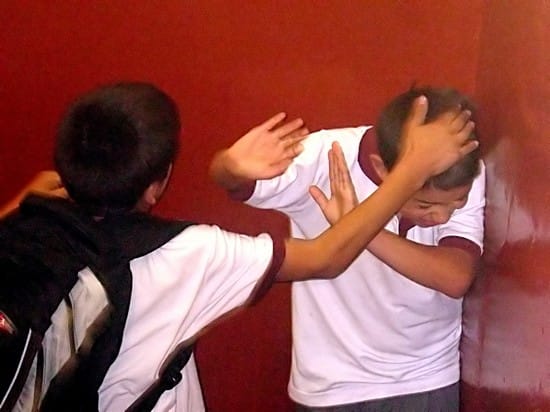
ABSTRACT This study investigated the effects of social-cognitive group intervention on violence avoidance beliefs among at-risk adolescents. Fifty high school students were randomly assigned to an experimental or a control group. The experimental group participated in ten, 2-hour weekly sessions of a social-cognitive intervention. Both groups were administered a questionnaire before, immediately following, and 3 months after the intervention. Findings showed that the social-cognitive intervention did not result in significant differences between the groups on violence avoidance beliefs at posttest or follow-up. In addition, drug/alcohol users and nonusers, fighters and nonfighters, and students threatened at school and those not threatened were compared. Students who used drugs/alcohol and fought in school had significantly lower scores (i.e., a greater belief in using violence as a coping technique) than did students who did not engage in those behaviors. Many schools have become battlegrounds in which both students and teachers fear for their safety (Kingery, Pruitt, Heuberger, & Brizzolara, 1993). Interpersonal disputes between students and between teachers and students have increasingly resulted in aggravated assault and the use of lethal weapons. School achievement is sacrificed in this atmosphere of disorder, violence, and fear (Sturge, 1982). Violent crimes (murder, rape, robbery, assault, burglary, larceny/ theft, and arson) are at some of the highest levels in history for adolescents (U.S. Department of Justice, 1991). In fact, the National School-Based Youth Risk Behavior Survey conducted by the Centers for Disease Control and Prevention (1993) found that 18% had been in a fight at school. In the 30 days preceding the survey, 6% reported carrying a gun, knife, or club to school and 8.5% reported being threatened with such a weapon. Interestingly, many adolescents believe that violence is an effective way to resolve conflict. The National Adolescent Student Health Survey (1989) found that 78% of students believed they should fight if someone hit them, while 73% believed they should fight if someone hurt someone they cared about. Because of the significant effects of violence on the psychological and physical well-being of youth, programs designed to help them cope with conflict represent a major priority for school health professionals and administrators. The purpose of this study was to determine the effects of a social-cognitive group intervention on violence avoidance beliefs among at-risk high school students. Particular attention was paid to the differences between students who used drugs/alcohol, fought in school, and were victimized at school and those who were not involved in these behaviors. VIOLENCE IN SCHOOLS Violence within the school setting has devastating and long-lasting effects. Violence or the threat of violence reduces the ability of students to concentrate and learn (Toby, 1980). Since education is a prerequisite for success, any disruption is damaging to the students' future. The weapons being brought to school have become more potent, increasing the probability that student altercations will end in serious or even fatal injuries (Ragguet, 1992). Specifically, national surveys have found that it is fairly common practice to bring weapons to school. According to Moore (1992), 26% of students reported carrying weapons to school, such as guns, knives, or clubs, at least once during the 30 days preceding his survey. Among those students who carried a weapon, 11% most often carried a handgun. The Center to Prevent Handgun Violence (1990) found that guns were used in the majority of homicides involving youth in the United States. Most homicides among youth occur in the context of an argument and are committed by someone known to the victim. In these cases, the immediate accessibility of a weapon is considered by many as the factor that turns an altercation into a lethal event (Page, Becker-Kitchin, Solovan, Golec, & Hebert, 1992). Large urban schools have generally been perceived as experiencing more violence. However, recent evidence suggests that rural areas are also plagued by violence. Kingery et al. (1993) collected data on school violence from 7th--l2th graders in 38 rural central Texas school districts. More than half of the boys reported carrying a knife to school (twice the national average) and 18% of 15- to 17-year-old boys reported carrying a handgun to school (seven times the national average and a threefold increase from four years earlier). Further, most reported carrying a gun to school for protection or with the intent to shoot an aggressor. Results also revealed that in the 12 months preceding the survey, 16% of the students had been robbed, 37% had been threatened, and 15% had been physically attacked while at school. Thus, violence among adolescents is serious and growing health issue. However, violence education within schools is seldom systematically attempted (Kingery, Pruitt, & Hurley, 1992). EFFECTIVE INTERVENTIONS FOR ADOLESCENT VIOLENCE Page et al. (1992) have stated that interventions designed to prevent or modify psychosocial or behavioral risk factors associated with violent behavior (e.g., weapon carrying, poor anger management and problem-solving skills, and alcohol use) have potential as effective strategies. Wodarski and Hedrick (1987) have proposed that a violence prevention model should include family and school interventions designed to teach parents and children: (1) problem-solving for conflict resolution, (2) cognitive anger control, (3) peer enhancement and communication skills, and (4) substance abuse prevention. Additionally, Page et al. (1992) stressed the need to move toward intervention models based on integrated community and school efforts to deal with the problem. Interventions emphasizing social skills training--utilizing peer role models, behavioral rehearsal, and psychodrama--have had some success in reducing violent interactions among adolescents (Hammond, 1990). The Violence Prevention Project of the Health Promotion Program for Urban Youth, one of the nation's leading violence prevention efforts (Prothrow-Stith, Spivak, & Hausman, 1987), involves a ten-session education program that provides descriptive information on the risks of violence and homicide, alternative conflict resolution techniques, and a nonviolent classroom atmosphere that values violence prevention behavior. Teaching methodologies include decision-making exercises on the consequences of and alternatives to fighting, as well as role-playing activities that emphasize and reinforce nonviolent interactions. The curricular component of the program is supplemented by a network of secondary-level support, including training programs for community agencies to help them identify high-risk individuals, im plement strategies for conflict resolution, and make referrals for individuals at-risk for violence. A mass media campaign is an additional element. Preliminary results indicate that the program has benefits for self-esteem and led to a reduction in fights and arrests (Prothrow-Stith, Spivak, & Hausman, 1987). Another promising effort aimed at youth violence is Positive Adolescent Choices Training (PACT). This school-based program is designed to equip youths with prosocial tools that aid them in resisting acts of aggression and lessen their chances of becoming victims of violence (Hammond, 1990). Key program components include modeling, role-playing, skill transference, praise, and related feedback on skill enactment. Preliminary evaluation research on PACT has indicated that the program enhances prosocial behaviors and decreases aggressive behaviors in students. Hartman (1979) studied adolescents who participated in a social-cognitive group intervention that focused on prosocial methods for dealing with stressful personal and interpersonal situations. After eight weekly sessions, which involved cognitive restructuring, role-playing, modeling, journaling, and discussion, the experimental group reported significantly greater coping skills and prosocial behaviors and significantly fewer aggressive behaviors as compared with the control group. Hartman also found significant treatment effects at a three-month follow-up assessment. METHOD Sample Fifty students, in grades 9 though 12, from a school in east-central Texas were recruited to participate in the study. Teachers were informed of the purposes of the research and asked to generate a list of students based on at-risk criteria. A review of students' school records was then conducted by school counselors. All subjects were at-risk based on low socioeconomic status, educational failure, evidence of alcohol and drug use, parent drug use, and disciplinary actions at school or poor attendance. Subjects were required to meet at least one of these criteria to be included in the sample. School counselors then approached the students to describe the program and determine their interest. At-risk students who volunteered were randomly assigned to an experimental or a control group. Student and parent informed consent was obtained prior to participation. Twenty-two students participated in the intervention and 21 were assigned to the control group. Three students in the experimental group and 4 in the control group dropped out of the study. The majority of students were between the ages of 14 and 17 years. Twenty-one were female and 22 male. The ethnic composition was 44% White, 30% Black, 23% Hispanic, and 2% other. (See Table 1.) Procedure The experimental and control groups were asked to complete a questionnaire before, following, and 3 months after the social-cognitive group intervention. Confidentiality was ensured. The questionnaire took approximately 45 minutes to complete. Students who were not present during data collection were mailed questionnaires, instruction sheets, and self-addressed stamped envelopes. Instrumentation The questionnaire gathered demographic, violence, and drug/alcohol use information. Questions from the Student Health Survey (Pruitt, Kingery, & Heuberger, 1992) were also included. These pertained to violence education and involvement, ways to avoid fighting, and reasons for fighting. Content validity was established by a panel of experts. Reliability was established for the questionnaire using 10th- to 12th-grade at-risk students from a high school located in an adjacent city. Test-retest reliability for total scores was .96 over a one-week period. Internal consistency was established; a coefficient alpha of .83 was found for violence avoidance beliefs. Intervention The experimental group met one evening a week for 10 consecutive weeks, each session lasting 2 hours. All sessions were conducted by the licensed counselor who developed the program. Teaching methods included small and large group discussions, lectures, public speaking and self-disclosure, role-playing, journaling, and group/individual feedback. In addition, 10 adult leaders from the business community served as mentors. They had been recruited through a series of newspaper and radio public service announcements. Mentors served as small-group facilitators and participated in session activities with the students. During the 10-week program, participants engaged in group and individual problem solving, cognitive restructuring, and social skills training. The intervention focused on enhancing: (1) coping and problem-solving skills; (2) relationships with peers, parents, and other adults; (3) conflict resolution and communication skills, and methods for resisting peer pressure related to drug use and violence; (4) consequential thinking and decision-making abilities; (5) prosocial behaviors, including cooperation with others, self-responsibility, respecting others, and public speaking efficacy, and (6) awareness of feelings of others (empathy). Data Analyses Data were analyzed using SPSS. A two-way analysis of variance (ANOVA) with repeated measures was used to test for significant differences between the groups on violence avoidance beliefs. Differences between drug/alcohol users and nonusers, students who fight in school and nonfighters, and students who have been threatened in school and those who have not were compared using t tests. Duncan's new multiple range test was used in post hoc analyses. The alpha level was set at p [less than or equal to] .05 for all analyses. RESULTS Two-way ANOVA revealed no significant differences between the experimental and control groups in mean scores on violence avoidance beliefs, F(1, 123) = 2.49, p = .12. Differences between pretest, posttest, and follow-up mean scores revealed that both groups experienced a slight decrease in violence avoidance beliefs from pretest to posttest ([M.sub.e] = -.82, [M.sub.c] = -3.72) and a slight increase from posttest to follow-up ([M.sub.e] = 2.64, [M.sub.e] = .53). A series of t tests were rim in which violence avoidance beliefs served as the dependent variable. Students who used drugs/alcohol had a significantly lower, F(1, 41) = 1.16, p = .04, mean level of violence avoidance beliefs (M = 59.28) than did students who did not use drugs/ alcohol (M = 67.00) (Figure 1). Students who physically fought in school had a significantly lower, F(1, 41) = 1.09, p = .001, mean level of violence avoidance beliefs (M = 54.66) than did students who never fought (M = 67.54) (Figure 2). There was no significant difference between students who were verbally threatened at school and those who were not threatened, F(1, 41) = 1.17, p = .25. However, students who were threatened or harmed by another student at school had a lower mean level of violence avoidance beliefs (M = 64.05) than did students who were never threatened or harmed (M = 67.36) (Figure 3). DISCUSSION Presently, there is a paucity of information on which intervention techniques have the most impact on violence. Although only a few violence prevention programs have been implemented in schools, those that emphasize social skills training and use peer role models and role playing have been successful in reducing violent interactions among adolescents (Hammond, 1990). Based on the findings, it has been assumed that a program combining social skills training, cognitive restructuring, behavioral consequencing, mentoring, and problem-solving approaches would affect violence avoidance beliefs. The results of the present study, however, do not seem to support this assumption. The efficacy of a 10-week social-cognitive group intervention for the enhancement of violence avoidance beliefs in at-risk high school students was not substantiated here. One possible explanation involves the fact that the youth in this study were identified by school personnel based only on at-risk environmental conditions; individual protective factors, such as self-efficacy, autonomy, and positive interpersonal social cues were not considered. It could be that environmental conditions did, in fact, put them at risk, but did not interfere with the development of prosocial skills. If this is the case, they may already have had the skills necessary to help them avoid violence. In reporting success using problem-solving interventions, Shure and Spivack (1988) noted that their treatments usually are implemented in classroom settings over a period of several months. It is possible that the at-risk population requires a longer treatment intervention than the 10 sessions provided here. Fischler and Kendall (1988) have speculated that intellectual competence is needed before interventions can be effective. While the treatment targeted at-risk youth, it may not have matched the intellectual level of the participants. Further, it was assumed that the concepts and the processes involved in the social-cognitive intervention would positively influence violence avoidance beliefs in at-risk youth. However, the material presented in the intervention may have been too broad for this sample. That is, the training approaches may specifically have to target the desired outcomes for the intervention to have an impact on at-risk adolescents. The results also suggest that the link between prosocial beliefs and social-cognitive interventions that incorporate social skills, cognitive restructuring, behavioral consequencing, adult mentoring, and problem-solving skills may be weak. Instead, other factors may influence violence avoidance beliefs in adolescents. For example, factors such as parent involvement and peer group mentoring, which were not strong components of this intervention, may have a greater impact. Finally, the number of subjects participating in the study was small. This was due to the lack of training space and the parameters established by the social-cognitive group intervention facilitator. Increasing the number of subjects would have increased the statistical power of the analyses, perhaps revealing significant differences between the groups on violence avoidance beliefs. On the other hand, anecdotal information from participants and group facilitators indicated that some positive changes took place as a result of the social-cognitive group intervention. While instruments were carefully selected to measure the broad spectrum of program goals, it is possible that changes were too subtle to be measured by the study's scales. For example, many participants commented that, as a result of the intervention, they were more aware of their ability to make good choices rather than react in a self-destructive manner when confronted with negative interpersonal situations. They also talked about how, for the first time, they felt they were part of a group that really cared about each other. Many teachers and counselors commented on the positive changes and prosocial behaviors exhibited by participants after the intervention. Thus, behaviors resulting from this intervention might be manifested in a situationally discrete manner, which might not be adequately measured by the instrument used in this study. This study also examined the differences in violence avoidance beliefs between at-risk students who used drugs/alcohol, fought, and were victimized versus those who were not involved in those behaviors. Students who never used drugs/alcohol had a significantly higher mean score on violence avoidance beliefs than did those who used drugs/alcohol. In addition, students who fought at school had a significantly lower mean score on violence avoidance beliefs than did students who never fought. These findings indicate that students who fight in school and use drugs/alcohol are more apt to use violence as a means of conflict resolution. CONCLUSIONS The results of this study are relevant not only to school personnel, but especially to professionals who develop interventions for at-risk youth. First, caution is required when selecting a social-cognitive group approach to foster violence avoidance beliefs with at-risk adolescent populations. Clearly, more research is needed to determine effective intervention strategies to combat the growing problem of violence among American adolescents. Second, at-risk students who used drugs/alcohol were found to be more apt to use violence as a means of achieving a desired outcome than were students who did not use drugs/alcohol. The fact that drug use and violence were intertwined suggests that violence avoidance skills and drug education should be offered simultaneously. Finally, at-risk students who knew more about how to avoid fights tended not to fight in school. Consequently, when students gain knowledge about ways to avoid fighting, they tend not to engage in violent behavior. This illustrates the importance of taking a proactive stance by offering violence prevention education. B. E. Pruitt, Ed.D., Robert S. Hurley, Ph.D., and Danny Ballard, Ed.D., are Associate Professors in the Department of Health and Kinesiology, Texas A & M University, College Station, Texas. Brian Colwell, Ph.D., is an Assistant Professor in the Department of Health and Kinesiology, Texas A&M University, College Station, Texas. Paul M. Kingery, Ph.D., M.P.H., is an Assistant Professor in the Department of Kinesiology and Health Promotion, University of Kentucky, Lexington, Kentucky. Reprint requests to Kathleen J. Cirillo, Ph.D., Executive Director, Leadership Education Foundation, 9225 Brookwater, College Station, Texas 77845. REFERENCES Centers for Disease Control and Prevention. (1993). 1993 national school-based youth risk behavior survey. Atlanta, GA: Center for Disease Control and Prevention. Center to Prevent Handgun Violence. (1990). Caught in the crossfire: A report on gun violence in our nation's schools. Washington, DC: Center to Prevent Handgun Violence. Fischler, G. L., & Kendall, P. C. (1988). Social cognitive problem solving and childhood adjustments: Qualitative and topological analyses. Cognitive Therapy and Research, 12(2), 133-153. Hammond, W. R. (1990). Positive adolescent choices training (PACT). Washington, DC: American Association of State Colleges and Universities. Hartman, L. M. (1979). The preventive reduction of psychological risk in asymptomatic adolescents. American Journal of Orthopsychiatry, 49(1), 121-135. Kingery, P. M., Pruitt, B. E., Heuberger, G., & Brizzolara, J. A. (1993). School violence reported by adolescents in rural central Texas. Unpublished manuscript, Texas A&M University, College Station, TX. Kingery, P. M., Pruitt, B. E., & Hurley, R. S. (1992). Violence and drug use among adolescents: Evidence for the U. S. National Adolescent Student Health Survey. The International Journal of Addictions, 27(12), 1445-1464. Moore, J. (1992). Behaviors related to unintentional and intentional injuries among high school students -- United States, 1991. Journal of School Health, 62(9), 439-443. National Adolescent Student Health Survey. (1989). A report on the health of America's youth. Reston, VA: Association for the Advancement of Health Education. Page, R. M., Becker-Kitchin, S., Solovan, D., Golec, T. L., & Hebert, D. L. (1992). Interpersonal violence: A priority issue for health education. Journal of Health Education, 23(5), 286-292. Prothrow-Stith, D., Spivak, H., & Hausman, A. J. (1987). The violence prevention project: A public health approach. Science, Technology and Human Values, 12, 67-69. Pruitt, B. E., Kingery, P. M., & Heuberger, G. (1992). The student health survey. College Station, TX: Health Educational Foundation of Texas. Ragguet, P. D. (1992). An exploration of fifth-grade students' attitudes toward violence and the use of guns: Psychological and environmental factors. Unpublished doctoral dissertation, Cleveland State University, Cleveland, OH. Shure, M. B., & Spivack, G. (1988). Interpersonal cognitive problem solving. In R. H. Price, E. L. Cowen, R. P. Lorion, & J. M. Ramos-McKay (Eds.), 4 ounces of prevention: A casebook for practitioners. Washington, DC: American Psychological Association. Sturge, C. (1982). Reading retardation and antisocial behavior. Journal of Child Psychology and Psychiatry, 23, 21-31. Toby, J. (1980). Crime in American public schools. Public Interest, pp. 18-42. Wodarski, J. S., & Hedrick, M. (1987). Violent children: A practice paradigm. Social Work in Education, Fall, 28-42. U.S. Department of Justice. (1991). Uniform crime reports for the United States. Washington, DC: Federal Bureau of Investigation. |
| < Prev | Next > |
|---|